


Through reforestation efforts, the restoration of degraded areas, and sustainable productive practices, the initiative demonstrates how reintegration can contribute to environmental protection and peacebuilding.
Entering the Los Palmera property in El Paso, Cesar, the road soon vanishes behind a swirling cloud of dust that at times makes it difficult to see ahead. The hot air presses down, and the landscape seems frozen in time: scattered trees, thorny shrubs, cacti, and vegetation that survives in one of the driest regions of Colombia’s Caribbean coast.
This territory, located between the Perijá Mountain Range and the Sierra Nevada de Santa Marta, is part of one of Colombia’s most threatened ecosystems: the tropical dry forest.
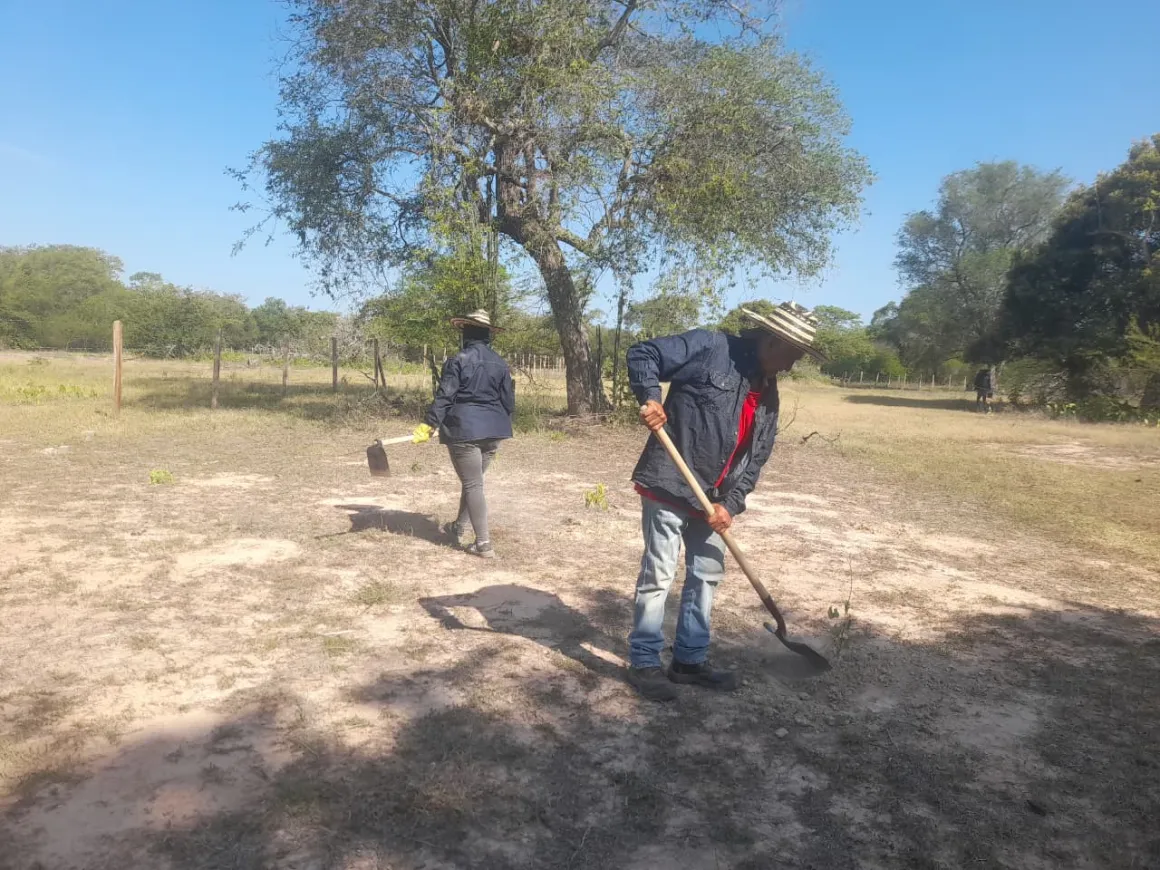
After several kilometers, newly built wooden and wire fences come into view, along with patches of forest that still survive on the 1,900-hectare property owned by COOPERPAZCE, a cooperative of peace signatories. There, signatories to the 2016 Peace Agreement and neighboring communities, including many young people, work together to restore degraded lands, protect the tropical dry forest, and build new ways of living in and caring for the territory.
The initiative is part of the Cesar Corridor of Life Program, led by the Government of Colombia and the Ministry of Environment and Sustainable Development, and financed through the Fund for Life and Biodiversity. As part of this process, the Alma-Natura Consortium, made up of Fundación Natura and Fundación Alma, identified COOPERPAZCE as a strategic partner for carrying out environmental restoration actions linked to reintegration efforts.
The project included fencing off land adjacent to the Ariguaní River to prevent grazing and create the conditions needed for natural ecosystem recovery. In addition, participants planted native tree species alongside fruit trees such as mango and citrus, demonstrating that agricultural production can be integrated with ecosystem restoration and conservation.
Marceliano Tamara Rivera, a signatory to the peace agreement and member of the cooperative, gestures to the priority areas on a map and explains that one of the project's main objectives is to restore the ecosystem and allow wildlife to return. “We want this to be a beautiful place where lots of people can come and visit us,” he says.
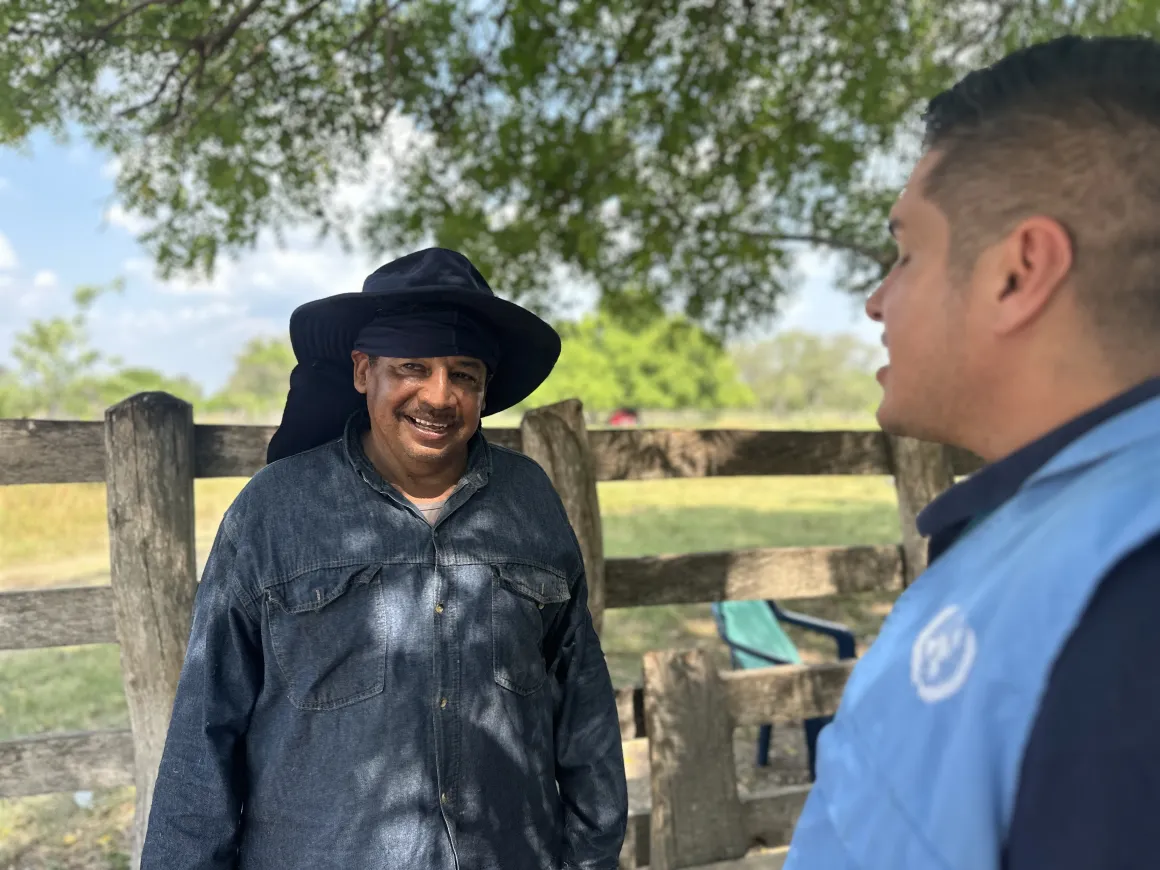
In other areas, they began implementing more sustainable livestock farming practices, integrating trees and resting spaces to reduce soil degradation caused by years of overgrazing.
For decades, large areas of these forests have been cleared for cattle ranching, agriculture, and extractive activities, transforming the landscape and degrading much of the Cesar corridor.
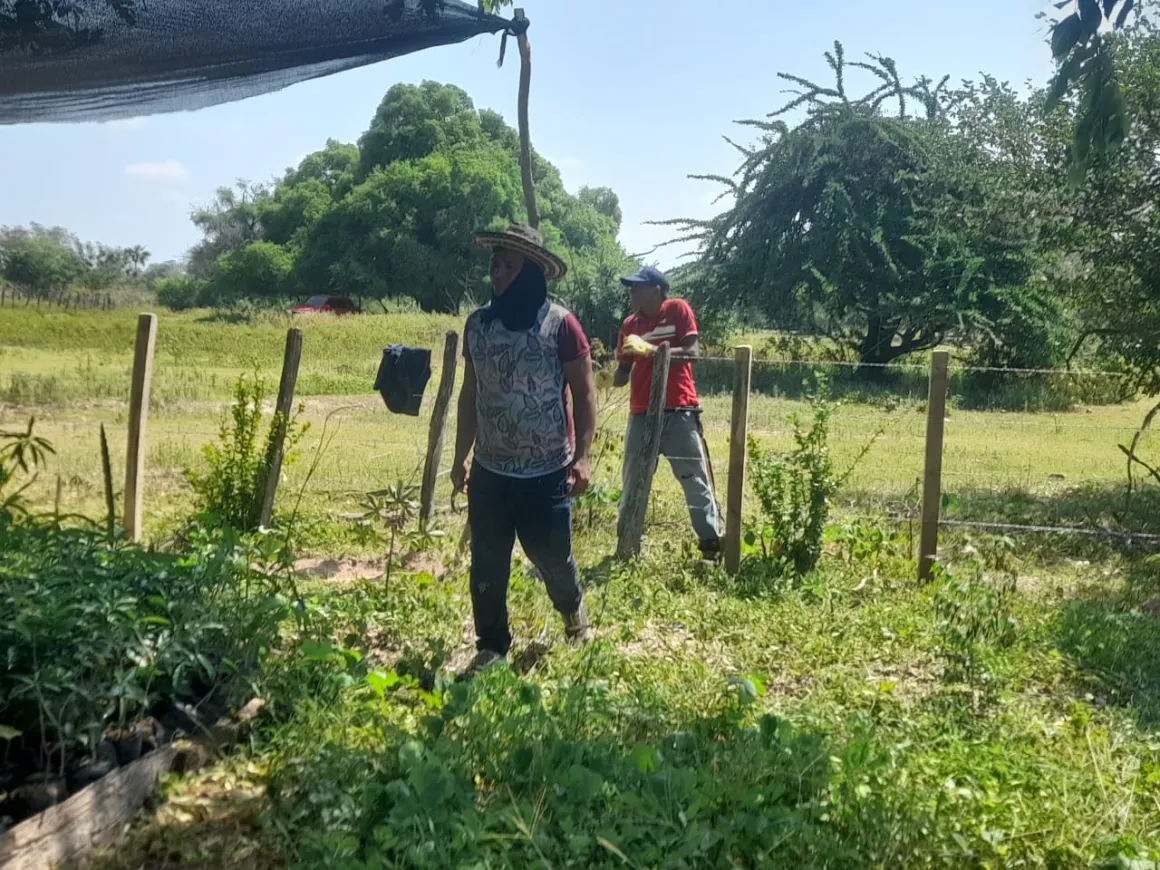
Wilson Castro Rodríguez, a restoration specialist with the Alma-Natura initiative, explains that one of the greatest challenges was integrating technical expertise with the knowledge of those who have lived in the territory for years.
“There is no single recipe for ecological restoration,” he says. For this reason, the project incorporated local knowledge about the river's behavior, flood dynamics, native species, and the natural cycles of the tropical dry forest.
At Los Palmera, a group of men and women attends a first-aid training session on responding to workplace accidents in rural areas. Despite the scorching temperatures, the group stays focused beneath the shade of a tree. The participants are workers employed by COOPERPAZCE to support the implementation of the project's activities. Most of them are young people from neighboring communities who have been affected by the decline in job opportunities following the closure of mining companies in the region.
Karla García, one of them, holds a bandage to help immobilize the injured arm of one of her coworkers during a simulated exercise. Other members of the group hand out cold drinks to help ease the afternoon heat. The day also marks the completion of this stage of the project in the region.
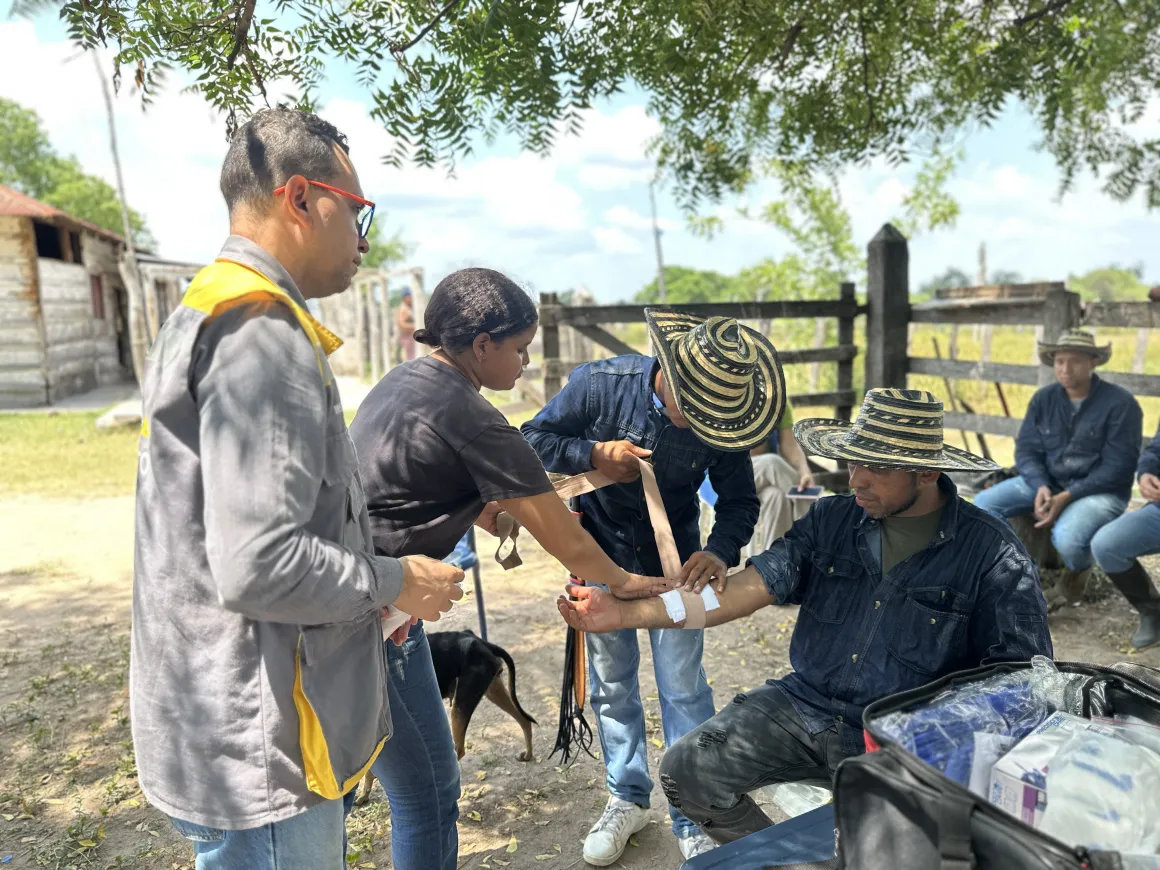
Karla says that her involvement in the reforestation activities changed the way she connects both with the environment and the people she met during the project. “Being able to take part in reforestation activities made me feel that I was contributing something positive to the environment and to local communities,” she says. Working alongside the peace signatories, she adds, allowed her to gain a firsthand understanding of the efforts they are making to build new opportunities in the region.
Over the months, the results of those efforts began to become visible. According to Marceliano, birds and other animals are now appearing more frequently in the property's protected areas. He also says that neighboring communities and local community action boards have shown interest in replicating similar initiatives to restore degraded land and plant trees in other parts of the region.
Although the full recovery of the tropical dry forest may take decades, the first signs of change are already visible in El Paso. The new protected areas, the natural regeneration of vegetation, and the growing interest among local communities reflect a long-term commitment to safeguarding the territory.
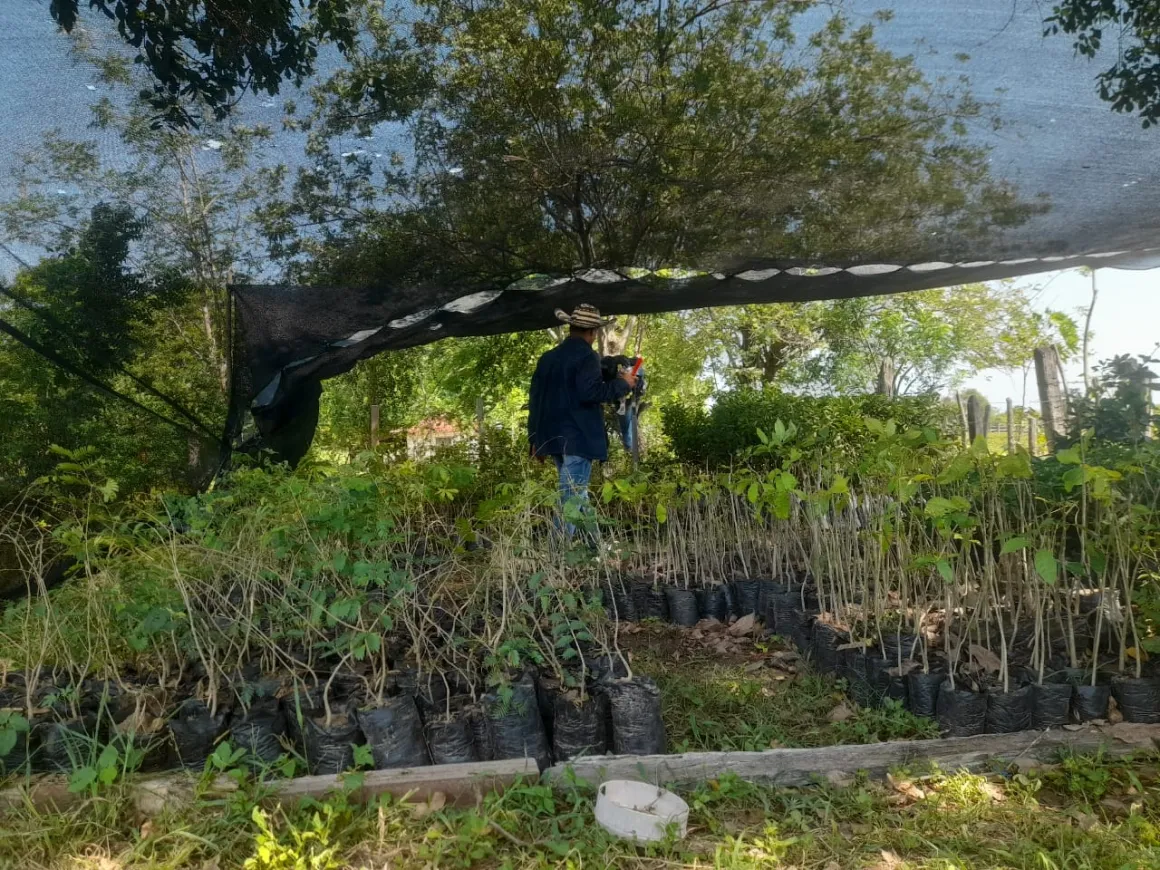
Nearly ten years after the signing of the Final Peace Agreement, experiences like that of COOPERPAZCE show how reintegration can also take the form of environmental stewardship, forest restoration, and working hand in hand with rural communities. In a region long shaped by environmental degradation and extractive economic activities, this group of peace signatories and young community members is rebuilding, little by little, a different relationship with the land, one rooted in environmental sustainability and essential to consolidating peace.
By: Melissa Jaimes Ochoa
Public Information Officer
United Nations Verification Mission in Colombia


