


The paths of a renowned visual artist who returned to reconnect with his childhood memories and a young muralist who found in art a way to change his future converged in Guaviare, thanks to the opportunities created through the Peace Agreement.
There are no art galleries or fine arts schools in San José del Guaviare. What has always existed, say those born between the jungle and the river, is the need to tell the story of the territory. Perhaps it was from that impulse that the stories of Javier Perdomo and Oscar Villalobos emerged, two artists separated by a generation yet united by the same landscape, by art, and, in some way, by the spaces opened up by the Peace Agreement.
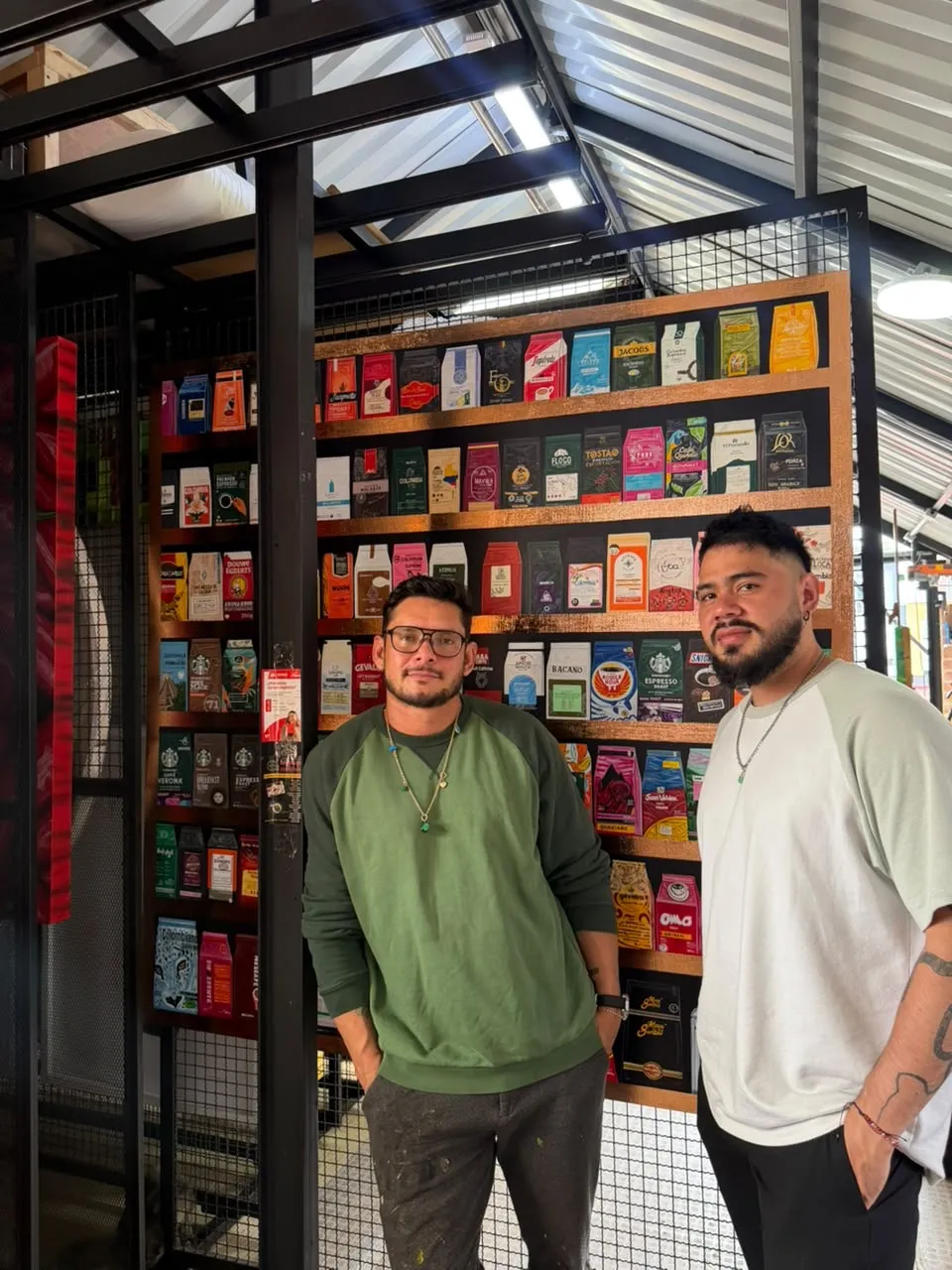
Javier Perdomo is a 29-year-old artist who began painting graffiti on the streets of San José del Guaviare and went on to become a muralist and an art student at the National University of Colombia in Bogotá. Oscar Villalobos, 38, spent his childhood in the jungles of Guaviare. After being forced to flee the violence with his family and settle in Bogotá, he went on to become a renowned visual artist.
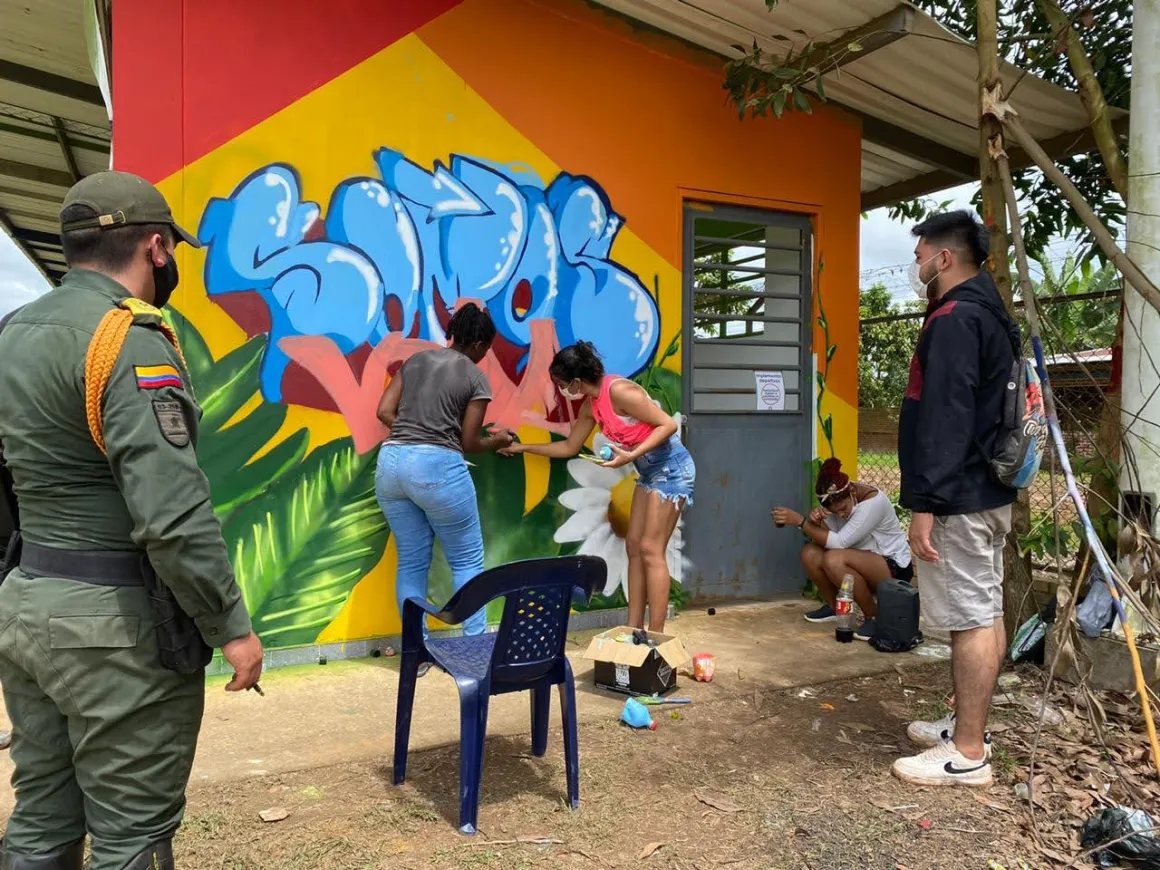
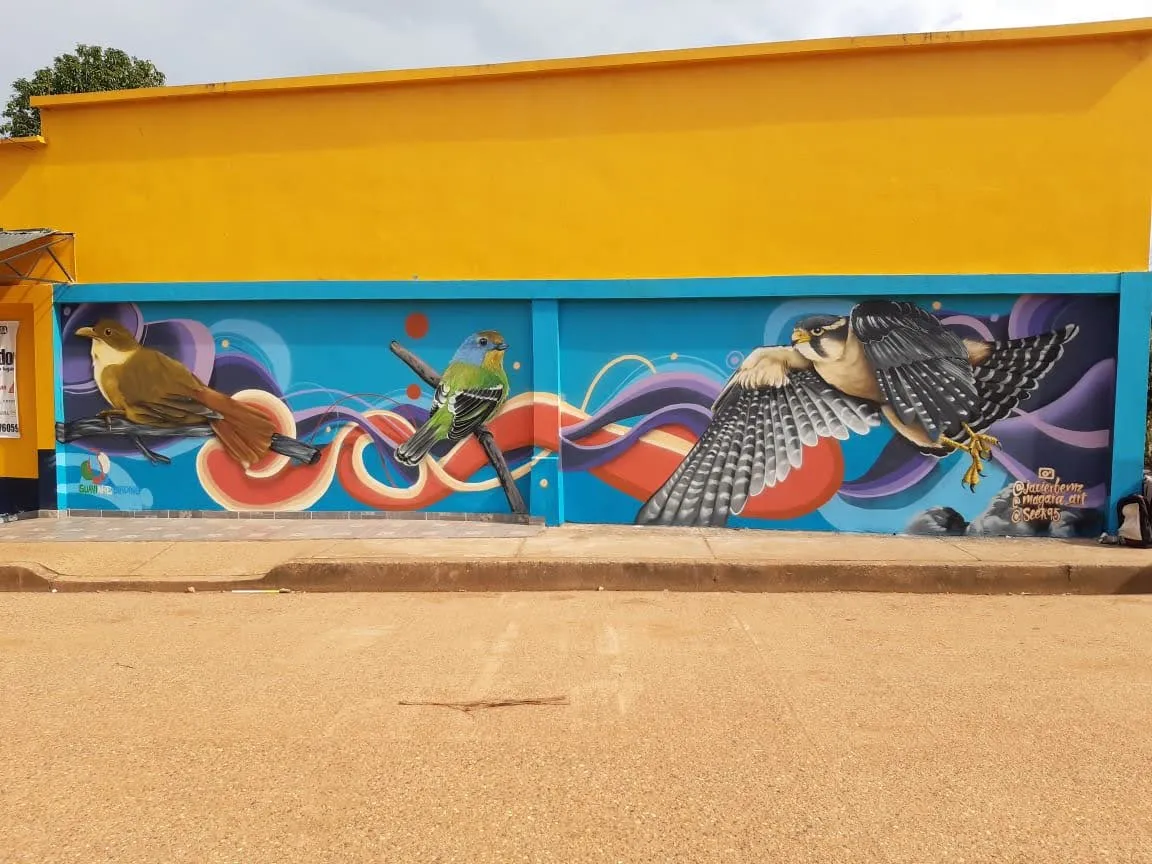
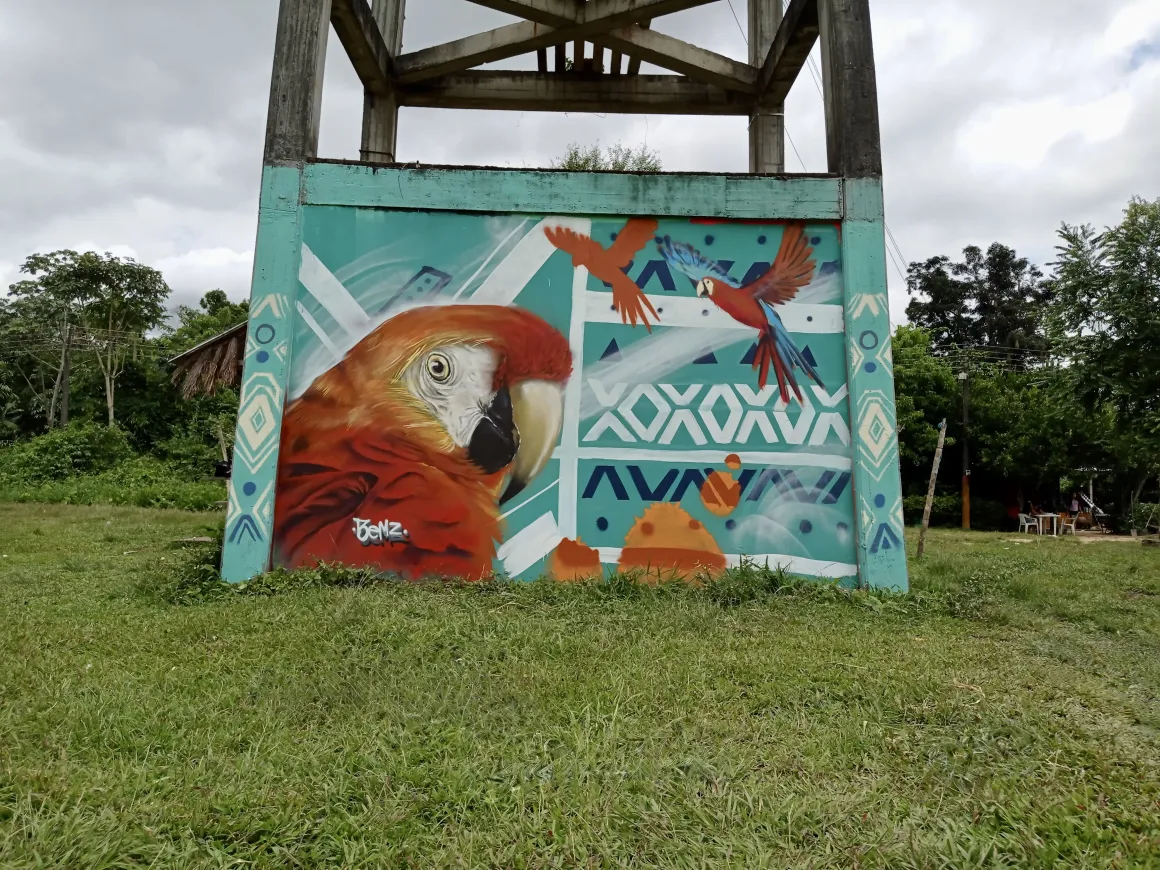
Javier Perdomo founded a movement of self-taught young artists who embraced muralism as their form of expression. Soon afterward, and driven by the momentum of the Peace Agreement signed in 2016, Javier began painting murals for national and international organizations. Among his first projects were several murals in the Territorial Spaces for Training and Reintegration (ETCRs) of Colinas and Charras, which had only recently been established.
The murals reflected the signatories' new life in civilian society, as well as the hopes and expectations of the community. This project helped Javier refine his craft, strengthen a movement of muralists, and ultimately forge his own path in life.
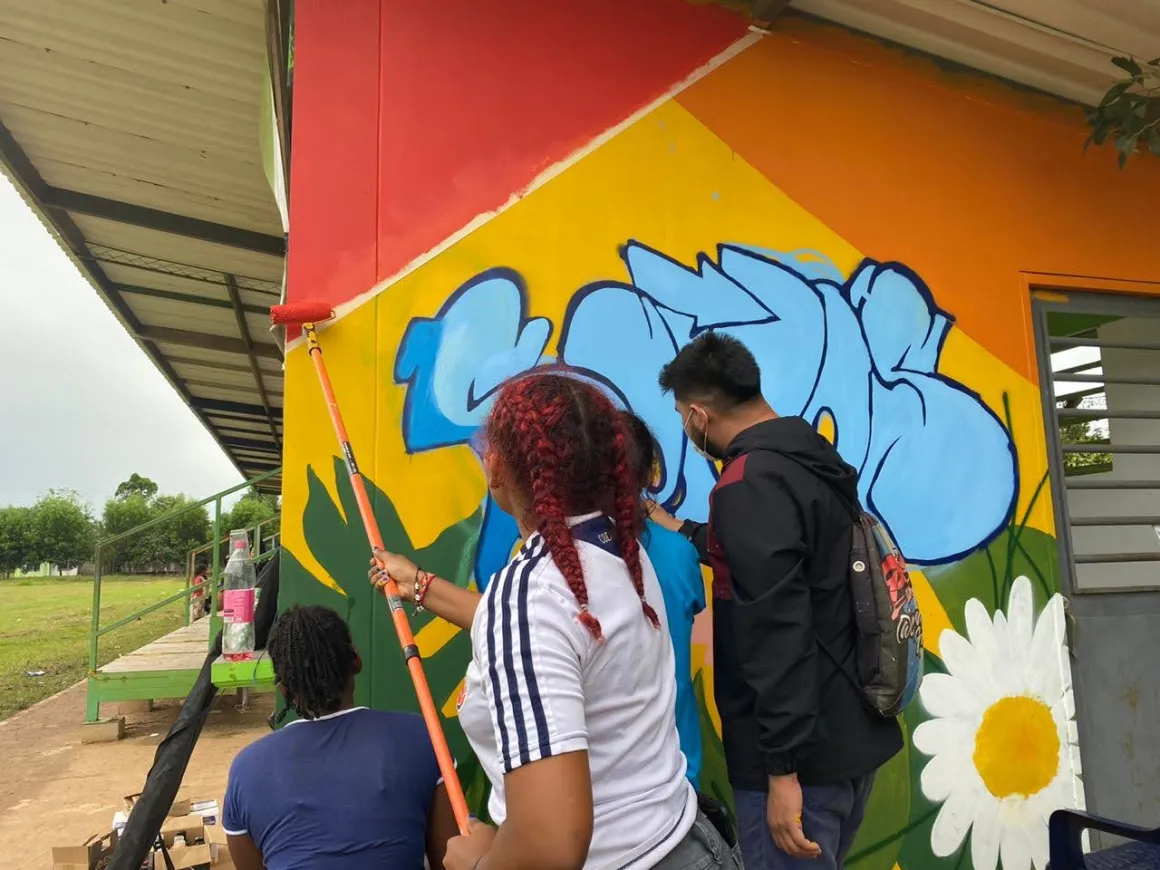
"I think institutions and international cooperation organizations found in us a different way of telling these stories of peace. We began working not only in urban areas, but also in rural communities. Right after the peace process, we began reaching out to communities in rural villages that had previously been affected by the conflict,” Javier recalls today, standing just a few meters from the School of Arts at the National University of Colombia, where he is in his eighth semester of Visual and Fine Arts.
“We built a collective that emerged from a shared desire to pursue peace,” he adds. It was during one of those meetings organized around the peace process that he met Oscar Villalobos, a renowned artist who would eventually become a close friend and a major source of inspiration. “We bonded. He came from the same place I did, and he planted the seed that inspired me to leave San José del Guaviare and learn about art,” he recalls.
Oscar Villalobos spent the first twelve years of his life in Guaviare. Although he does not like to describe himself as a victim of the conflict, he and his family were forced to flee the violence.
He spent his early school years in two boarding schools, one in the Mocuare Indigenous Reserve and the other in Raudal de Mapiripán. “We were displaced when I was in fifth grade, and I ended up finishing elementary school here in Bogotá,” he recalls.
Although he was very young, he was deeply aware of the reality of the region. “Nearly all of my classmates from boarding school ended up joining the guerrillas and were later killed in the conflict. Many young boys saw that as their path; for others, the only option was to work as coca harvesters,” he says.
Yet his childhood was not only shaped by violence but also by the majesty of the rainforest and the river. In fact, after the Peace Agreement was signed in 2016, he returned to Guaviare driven by a question that had lingered since childhood: Were the ceiba trees and the river really as immense as he remembered, or had memory, which “has a way of distorting places,” deceived him? It hadn't. The rainforest, he confirms, was exactly as immense as it had been in his childhood memories.
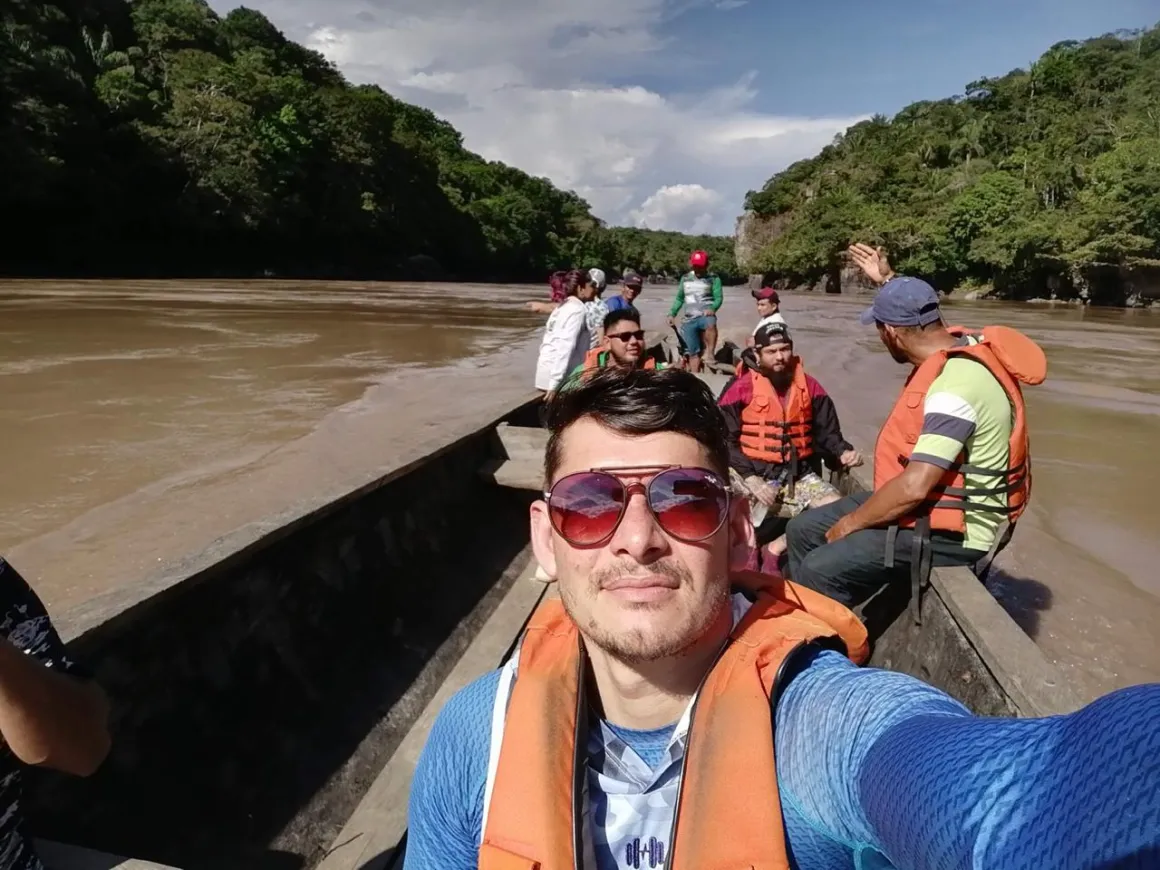
Oscar returned to Guaviare at the invitation of the ANATTO Arts Collective, which was preparing a series of murals to mark the closing of the Truth Commission, with support from the Regional Office of the United Nations Verification Mission in Colombia in San José del Guaviare.
During that visit to San José del Guaviare, he also got to know a group of young people taking part in the reintegration process. They did not all share his experience, but they had something in common: each, in one way, had been marked by the conflict. One of them was Javier. Inspired by Oscar, he eventually moved to Bogotá and spent two years living in Oscar's home. Today, he studies art at the National University of Colombia, thanks, Villalobos notes, to a scholarship program created for young people from regions shaped by the conflict. “He's already traveled to Europe and has taken part in art exhibitions,” the artist says.
“It's great to know that the work you've been part of can be seen,” Oscar says, “because other people can draw inspiration from it.” He adds, with the conviction of someone who has turned that belief into a way of life, that his role was simply to open a few doors, “just as others once did for me.”
“To Save a Boy from War”
Like Oscar, Javier Perdomo also comes from Guaviare, though today he divides his time between Bogotá and San José del Guaviare, to which he returns frequently. “It’s only a six-hour drive, or just an hour by plane,” he says. For now, though, those trips are on hold as he focuses on finishing his degree. After graduating, he hopes to return to his region, share what he has learned, and foster cultural exchanges with other artists.
For Javier, art is not an end in itself, but a tool for building peace: “If what we do can save even one boy from war, just one, then we’ve achieved something meaningful.” He believes the Peace Agreement “opened doors to regions where the state had never truly been present.”
Art as a Way of Escaping the Grip of Violence
Both Oscar and Javier engage with the conflict through their art, but neither allows the past to define them. Oscar summed up this perspective during a talk he gave in Guaviare in 2016—a talk that would later inspire Javier to pursue art professionally: “I spent twelve years there. During that time, there was a three-day massacre, but I also experienced countless other things. If we focus only on the bad, we miss out on all the beautiful things that happened the rest of the time,” he says. That is why he encourages people to visit Guaviare. He recalls bringing everyone from Colombian friends to the Hungarian ambassador to Guaviare, convinced that only by experiencing the territory firsthand can people overcome the fear left behind by the violence.
The rainforest, the river, and the landscapes of the region are majestic. “To us, they’re simply part of everyday life,” he says. “But take a foreign visitor to Guaviare, let them see the pink aquatic plants and Caño Cristales, and they'll be filled with wonder.” That sense of wonder is what he tries to convey through his art.
He sees art as a way of exorcising the pain of the past, transforming an experience shaped by more than fifty years of violence into something worth contemplating and appreciating. “Remembering with resentment, or simply dwelling on how a massacre unfolded, does not create common ground,” he says. “Art, however, can transform that pain into something else,” he reflects from his studio in Bogotá, surrounded by hundreds of paintings, many of them inspired by nature and by his homeland.
Javier, for his part, sums up his message to young people in the region: “The path to peace is difficult, but it's worth it. We have to take a chance on doing something different. Rather than sitting back and waiting for others to act on our behalf, we should contribute to peace through our own creativity.”
What binds these two stories together is not just the friendship that grew between Oscar and Javier through mural workshops and discussions about peace in San José del Guaviare, but also a shared belief, one they both describe in the same terms: planting a seed and letting others carry it forward.
Today, when Javier returns to San José del Guaviare, he finds more than just the murals he helped paint. He also sees other young people filling the town's walls with color, choosing to tell the story of their territory through art.
In the end, Oscar and Javier planted something far more difficult to measure than a mural or an exhibition: the possibility of transforming the violence that shaped their territory into catharsis while offering young people an alternative to violence through art.
By: Jorge Quintero
Public Information Officer
UN Verification Mission in Colombia


