


An academic forum analysed progress, challenges and recommendations to strengthen the urban implementation of the Final Peace Agreement in the country’s capital.
Almost ten years after signing the Final Peace Agreement, implementing it in urban contexts has become a major challenge for institutions, academia, and communities. Although much of the effort initially focused on rural areas, recent developments have highlighted the need to adapt implementation tools and strategies to the realities of cities.
To this end, as part of Peace Week, victims, signatories to the Agreement, institutional representatives and members of the academic community took part in the panel discussion ‘Progress, challenges and recommendations for urban implementation in Bogotá’, organised by the Alfredo Vázquez Carrizosa Institute for Human Rights and Peacebuilding at the Pontifical Xavierian University, in coordination with the Bogotá District Council for Peace, Victims and Reconciliation and with the support of the Bogotá Regional Office of the United Nations Verification Mission in Colombia.
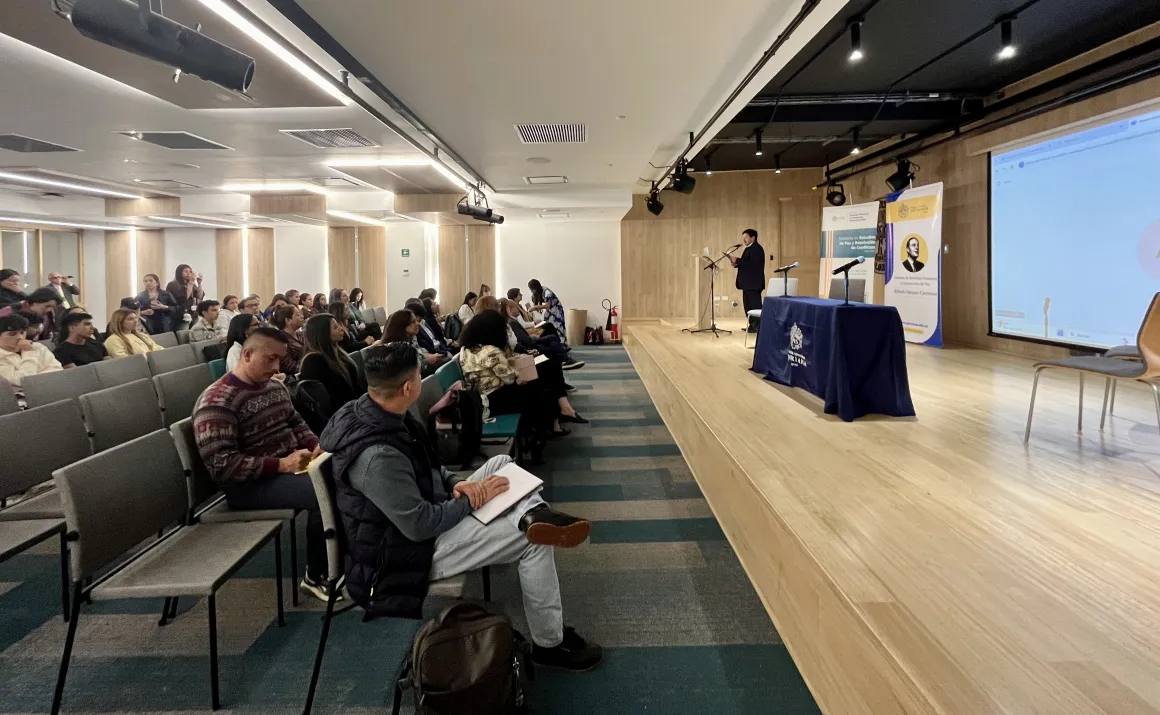
The event took place as part of the commemoration of the tenth anniversary of the Final Peace Agreement and provided an opportunity to reflect on the progress made and the remaining challenges in strengthening its implementation in urban areas.
For Lourdes Trinidad Muñoz Méndez, a community leader from Ciudad Bolívar, a victim of the armed conflict and a representative of the Provee Paz y Vida Foundation, the main challenge remains ensuring that the benefits of the Agreement’s implementation effectively reach local areas and communities. “We, as organisations and as local communities, hope that business ventures and productive projects will continue to be implemented, and that steps will be taken to improve the situation of women so that they can receive training and find employment, as well as finding housing solutions for families living in very difficult conditions in Ciudad Bolívar,” she said.
During the panel discussion, Doris Suárez Guzmán, a signatory to the Final Peace Agreement and founder of the Casa de la Paz La Trocha, highlighted that implementation in cities represents a reality that was not initially foreseen during the negotiations. “The implementation of the Agreement in the city was never envisaged. An urban focus was not envisaged due to the rural orientation of the now-defunct FARC-EP, but over time other realities have become apparent,” she stated. She also highlighted that Bogotá has become a forum for learning, coordination and confidence-building amongst various social sectors committed to peace.
For his part, Humberto Librado, a lecturer at the Javeriana University, emphasised the importance of recognising the Colombian capital as a space for encounter and pluralism. “It is essential for Bogotá to understand that we are a melting pot; we are a meeting point for many different ways of thinking. The implementation process gives us the opportunity to engage with those who have chosen to build their lives within the law and to move forward together towards a better city and a better society,” he said.
Alessandro Preti, Director of Verification at the UN Mission in Colombia, noted that implementing the Agreement in cities is a relatively new experience that opens the possibility of consolidating urban environments as settings for peace-building. In this regard, he emphasised that “Bogotá has developed important institutional tools to advance this objective and could become a model for other cities in the country”.
Among the best practices identified, he highlighted the creation of a dedicated institutional framework for the implementation of the Agreement, the strengthening of community-based work through local participation mechanisms, and the ability to adapt instruments originally designed for rural contexts to the city’s urban realities.
Preti also emphasised the need to “strengthen the sustainability of socio-economic inclusion processes, promoting strategies to generate opportunities that involve the private sector, the education system and the city’s development policies more decisively”. She also highlighted the importance of keeping victims at the centre of implementation efforts.
Speaking on behalf of the district authorities, Patricia Paola Padilla, Director of Peace and Reconciliation at the District Office for Peace, Victims and Reconciliation, noted that one key achievement has been implementing the Final Peace Agreement at the local level in Bogotá. “One challenge has been to adapt the tools for implementing the Agreement with an urban focus and to move beyond a sectoral approach, so that all bodies contribute to this common goal within their respective remits,” she explained.
Padilla also highlighted the importance of strengthening peace-building education in the city. “It is often thought that the armed conflict took place far from Bogotá, when in reality the city has been home to victims, signatories and communities affected by the violence. Understanding this reality is essential for making progress in reconciliation processes,” she said. In the Colombian capital alone, there are 425,069 victims of the armed conflict living there, according to official records as of September this year.
With regard to reintegration, the city continues to strengthen strategies for the socio-economic inclusion of those who have signed the Agreement. According to figures from the Agency for Reintegration and Normalisation (ARN), as of September this year, Bogotá has more than 700 signatories undergoing the reintegration process, equivalent to 5.5 per cent of the national total, concentrated in particular in the districts of Kennedy, Ciudad Bolívar, Bosa, Suba and Usme.
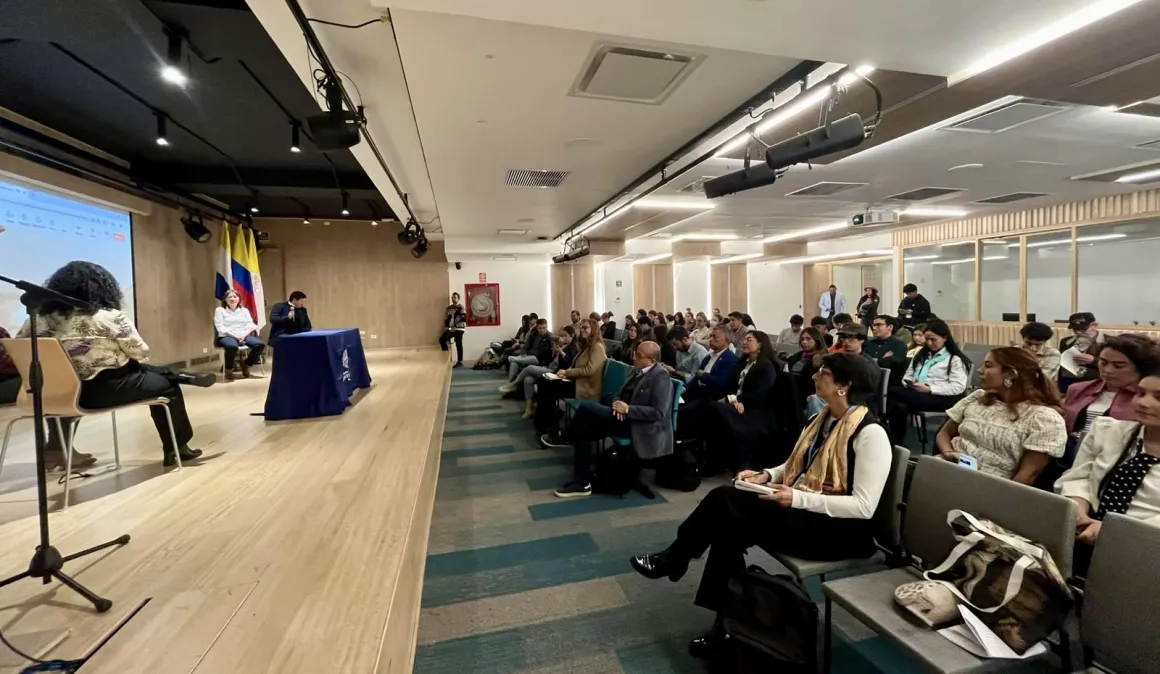
The panellists agreed that implementing the Peace Agreement in urban areas requires institutional responses tailored to cities' dynamics, greater cross-sectoral coordination, and active community participation to ensure sustainable reconciliation and peacebuilding processes.
After the panel discussion, participants joined working groups focused on Comprehensive Rural Reform, Reintegration, and Victims, to explore in greater depth the progress, challenges, and prospects for each component within Bogotá's urban context.
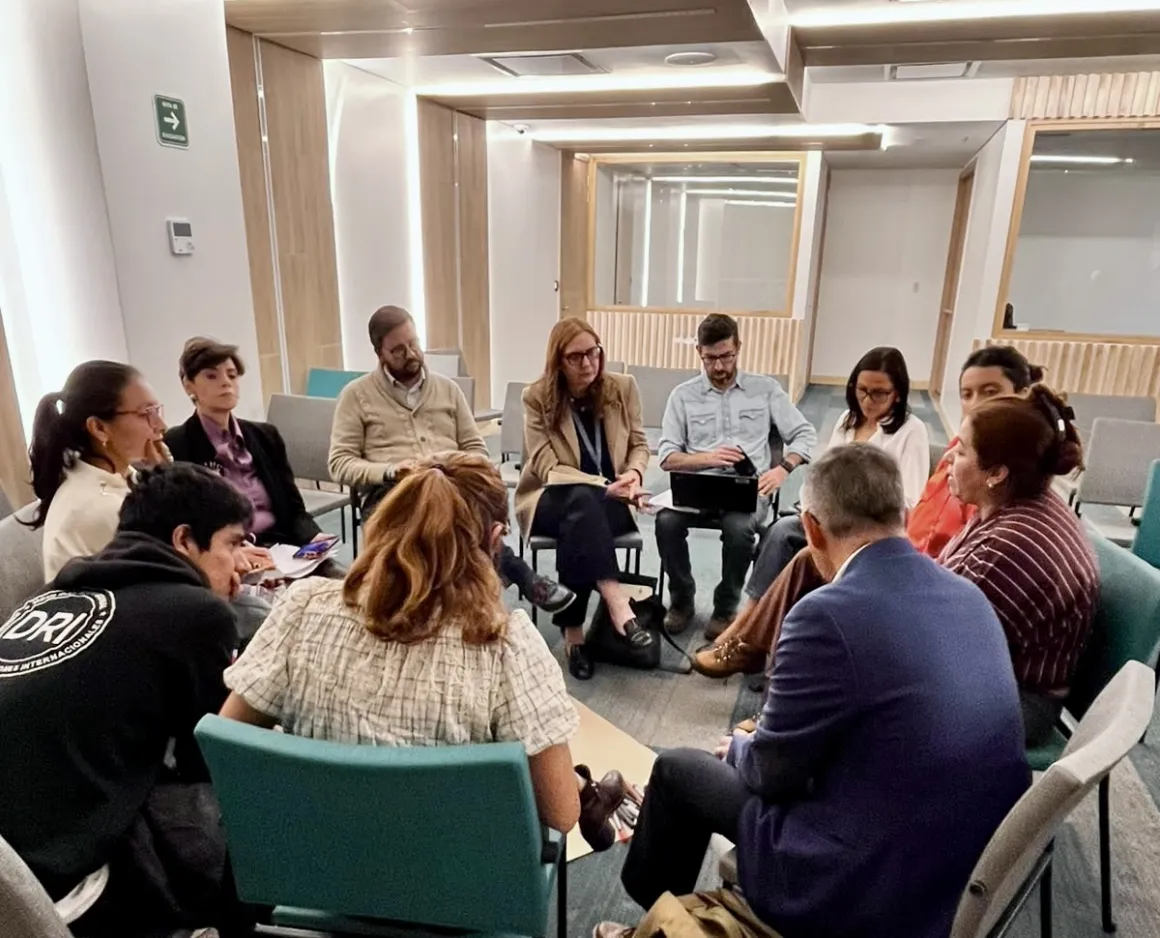
The event is part of a research project currently being carried out by Pontifical Javeriana University, with support from the United Nations Verification Mission in Colombia, on implementing the Final Peace Agreement in urban contexts.
By: Héctor Andrés Latorre Santaella
Strategic Communications Officer – Bogotá Region
UN Verification Mission in Colombia


