


Ten years after the signing of the Peace Agreement, former corridors of war are emerging as routes of memory and reconciliation. Former combatants, victims, and rural communities walk side by side, guiding visitors along paths that now tell a different story.
“Ten years ago, traveling along these roads could mean being kidnapped or ambushed,” says José del Carmen Viracachá as he adjusts his tour guide vest and introduces himself to the group.
Among the travelers joining the tour are journalists carrying photo and video cameras, as well as foreign tourists. None of them knows that the man guiding them today spent 27 years with the former FARC, navigating these very same mountains.
José del Carmen is in the Eastern Andes, in Viotá, Cundinamarca, his hometown. Today, he is leading a group of visitors to the summit of a mountain along a cobblestone road that has existed for over two hundred years. The route follows the Muisca Royal Road, a trail that preserves traces of Indigenous heritage, as well as stone walls built during the colonial era. At the mountaintop, about 2,400 meters above sea level, a statue of Saint Anthony of Padua rises from the mist. “If we keep walking for another four hours,” José del Carmen explains, “we'll reach Silvania and come out at La Vaca que Ríe.”
This trail, along with the El Cardenal and Casa Verde hills, connects the Tequendama and Sumapaz regions through the mountains. At the height of the conflict, these routes served as strategic guerrilla corridors. “Nowadays, they are tourist destinations dedicated to memory, peace, and reconciliation,” José del Carmen confidently tells the tourists who set out this morning to explore this destination for peace.
José del Carmen is 57 years old. He spent 27 years in the FARC, 14 years in prison, and has led the Asotourhepaz cooperative for five years. The organization brings together 67 members: 30 victims of the conflict, 14 signatories to the Peace Agreement, and 23 rural community members from the region. The cooperative promotes community-based tourism as an alternative to illicit economies, while protecting the environment, strengthening the rural economy, and keeping the memory of the conflict alive so that it does not happen again.
José del Carmen points to the mountain peak, where a Colombian flag and a white flag can be seen in the distance, symbolizing the arrival of peace in the region. Later, away from the group, he explains that on those very same slopes he experienced the realities of war all too well.
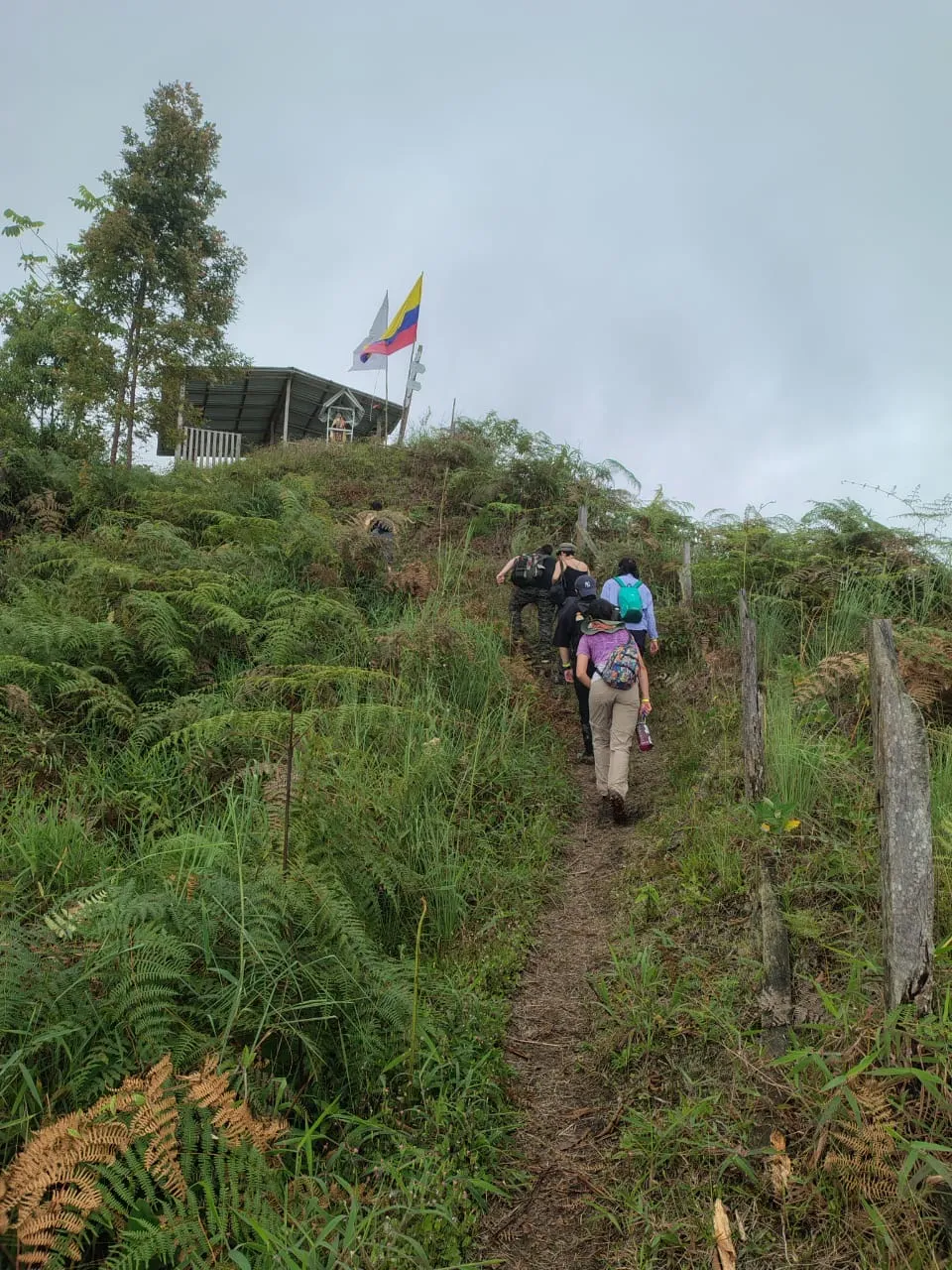
It was on the slopes of Casa Verde that he was captured on 30 April 2003. He was on his way to a guerrilla meeting when an Army patrol intercepted the group. “We lost a young man, and I ended up in prison,” he recalls, explaining that he was not an armed fighter but a member of the militia. “It was a very difficult time. I had to leave behind my six children, among them my young daughter. I wouldn't wish that life on anyone,” he recalls. After 14 years in prison, he was released following the Peace Agreement and given a second chance to rebuild his life.
The Road to Peace
After regaining his freedom, he spent his first months trying to build a new life in Bogotá. Like more than 13,000 former guerrilla combatants who laid down their weapons and returned to civilian life, he struggled to find his footing in the city. Soon, he returned to his native Viotá and to his parents' home, determined to piece his life back together. There, he began his reintegration process.
One opportunity that emerged through the reintegration process would change the course of his life and eventually lead him to become the leader of a community tourism project. The turning point came in 2018, when the Cundinamarca Peace Agency, an office of the departmental government, invited him and his longtime friend Luis Castillo, also a signatory to the Peace Agreement, to take part in a peace tourism workshop in Colombia's Coffee Axis.
“Luis and I were selected. Twenty-eight victims of the conflict from Viotá also attended, and they did not want us to participate. They knew we had just been released from prison and had been members of the guerrilla. They wanted nothing to do with us. But we had the opportunity to tell them our story.” The workshop marked the first time that victims and former combatants had sat down together to talk about their lives.
As he listened to discussions about tourism, José del Carmen found himself thinking about the Casa Verde hill, the Muisca Royal Road, and the El Cardenal ridge, places he knew by heart from his time on the other side of the conflict.
In the days following the workshop, they set about creating a tourism agency, and Asotourhepaz was born. They began by promoting the colonial trail, and little by little, the routes he had once traveled with the guerrilla started attracting university students, researchers, and foreign tourists. They also began receiving support from the government and the international community.
Working with Local Communities
From the outset, the project was conceived as a collective endeavor, and therefore involved other families from the region, including victims of the conflict who, in its early years, had been wary of former combatants. Susana Castillo Casas is one of them. She was displaced by the armed conflict and is now a member of Asotourhepaz. From a traditional countryside kitchen overlooking the mountains, Susana prepares and serves lunch for the tourists. She recalls that at first she did not want to work alongside former combatants. “I was full of doubts. They had been involved in the war, and that was traumatic for everyone. But I think I agreed because of my children. I wanted to teach them that peace is the better path.”
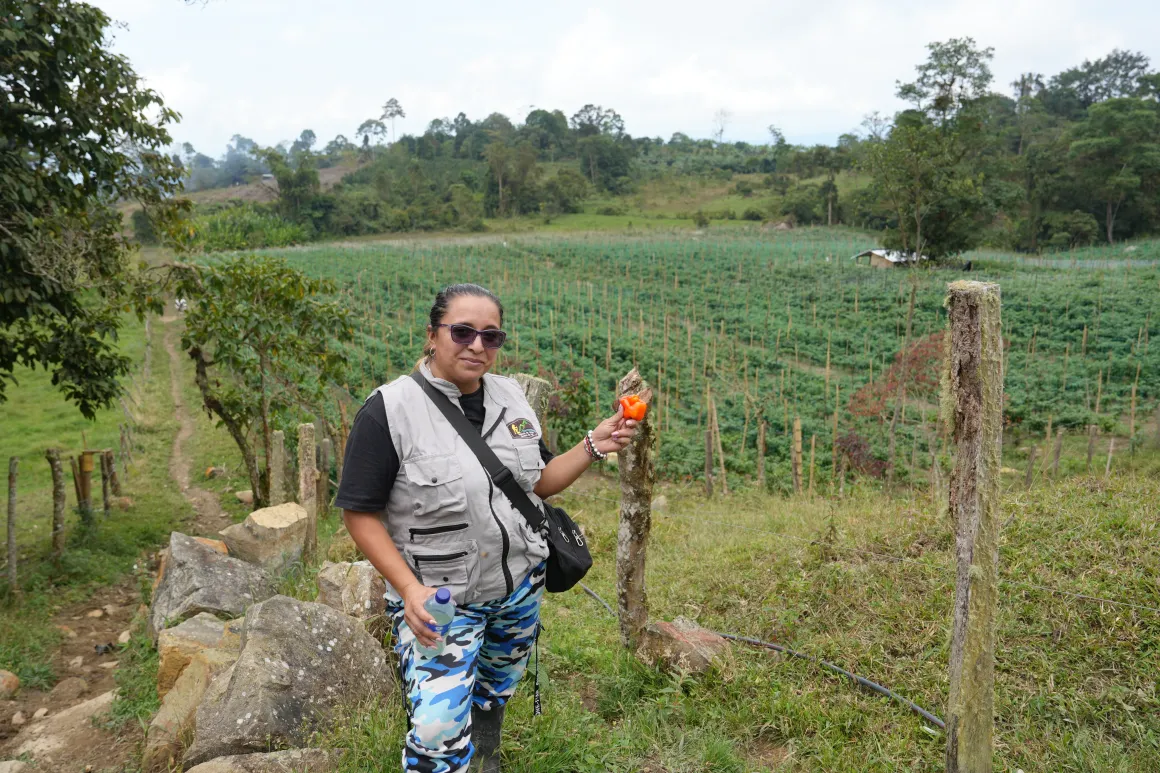
For six months, she says, Peace Agreement signatories, victims, and local community members worked together to clear the El Cardenal hill and prepare the lookout point where they later raised the flags. “Time and shared work eventually heal wounds,” she says. “Besides,” she adds with a laugh, “tourism keeps all of us busy. There's plenty of work, and no time to dwell on the past.” Today, Susana’s mother, Luz Marina, and her sister, Diana, prepare meals for the tourists. She runs one of the region's rural guesthouses. Her husband, Giovanni, and her son, Deivi Joan, work as tour guides. Deivi Joan is 16 years old and is working on improving his English. He wants to become a bilingual tour guide.
Asotourhepaz offers camping areas and works in partnership with local farms and rural guesthouses that can accommodate groups of up to 25 people. “Visitors can stay at partner hotels with swimming pools and all the usual amenities, but we try to encourage them to stay in the guesthouses, because it helps create jobs for people in the region,” José del Carmen Viracachá adds during lunch.
Coffee-Growing Region
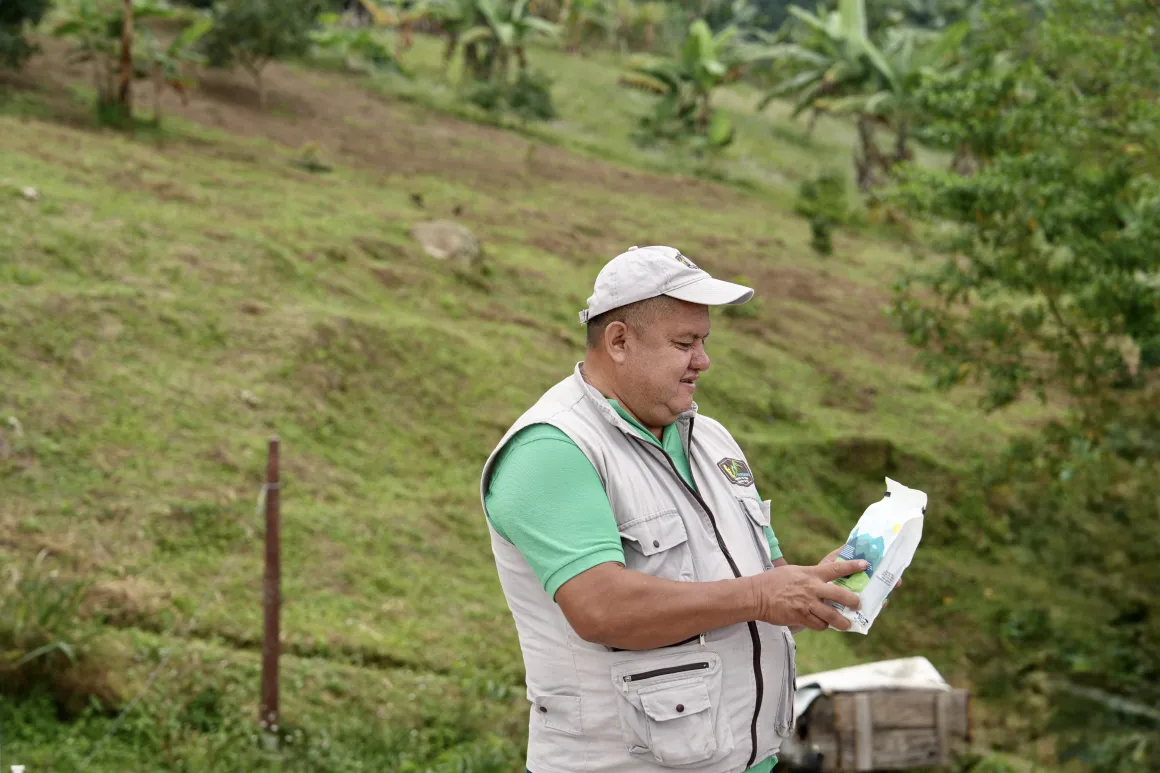
Among the crops that line the trails, coffee holds a central place. Viotá was one of the first municipalities in Colombia where coffee was introduced, and it is considered the coffee capital of the Tequendama region. For this reason, the tours include visits to coffee plantations, explanations of the production process, and an introduction to the association's own coffee brand: Café El Cardenal, which, like the entire project, was born from the joint efforts of farmers, Peace Agreement signatories, and conflict victims.
They currently have 25 coffee processing stations, donated by private companies, that produce coffee for the El Cardenal brand and ten other community brands associated with the project. Although production remains modest, two tons per semester, José del Carmen says that tourism and coffee already generate income for dozens of families in the region.
The effort to transform these territories into peace destinations has also been reinforced by institutional support. According to the Agency for Reintegration and Normalisation (ARN), there are 14 tourism-related productive projects approved by the National Reintegration Council (CNR), seven individual and seven collective projects, involving 249 people in the reintegration process: 175 men and 74 women. According to the ARN, these initiatives have received more than 3.116 billion Colombian pesos in investment, financed through resources from the National General Budget, the United Nations Multi-Partner Trust Fund, and other sources of international cooperation. Many self-managed projects that are not included in these records are also part of this effort.
The Ministry of Commerce, Industry and Tourism has also contributed to these initiatives through technical assistance, training, and marketing support. César Oliveros, head of the Destinations for Peace program, emphasizes that this support has also benefited communities that are not signatories to the Peace Agreement. For example, the Ministry has promoted the 100 Tourism Experiences for Memory and Peace program in 121 prioritized municipalities, benefiting victims of the conflict and local farming communities. In fact, 59 percent of these tourism experiences are led by victims of the conflict.
Regarding projects led by Peace Agreement signatories, César Oliveros explains that a capacity-building initiative for 15 community-based organizations of Peace Agreement signatories has recently been completed, resulting in the creation of a nationwide Tourism for Peace Network.
The Network
Asotourhepaz is a member of the Community Network for Tourism, Peace, and Reconciliation, which brings together tourism organizations from the departments of Meta, Caquetá, Guaviare, Bolívar, Putumayo, and Cundinamarca. From the Güejar River Canyon in Meta to the Territorial Training and Reintegration Area (ETCR) of Agua Bonita in Caquetá, former conflict-affected territories have begun opening up to community-based tourism. In Meta, projects such as Catypsa Expeditions, Oriente Verde, and Sendepaz have transformed the Güejar River Canyon and other natural routes into destinations for rafting, hiking, and birdwatching.
In Caquetá, initiatives such as Caguán Expeditions, which offers rafting on the Pato River; Yarí Travel; Turipaz, with its tours of the Agua Bonita Territorial Training and Reintegration Area (ETCR); and San José Travel have transformed reintegration spaces into vibrant rural communities that welcome visitors interested in memory and biodiversity. They all share a common approach: although they are led by signatories to the Peace Agreement, they work hand in hand with victims and local communities, and their tourism routes are designed for everyone. In fact, these tourism packages can also be purchased in Bogotá, where three houses of peace—La Trocha, Alternativa, and La Roja—serve as cultural spaces run by Peace Agreement signatories and open to the general public.
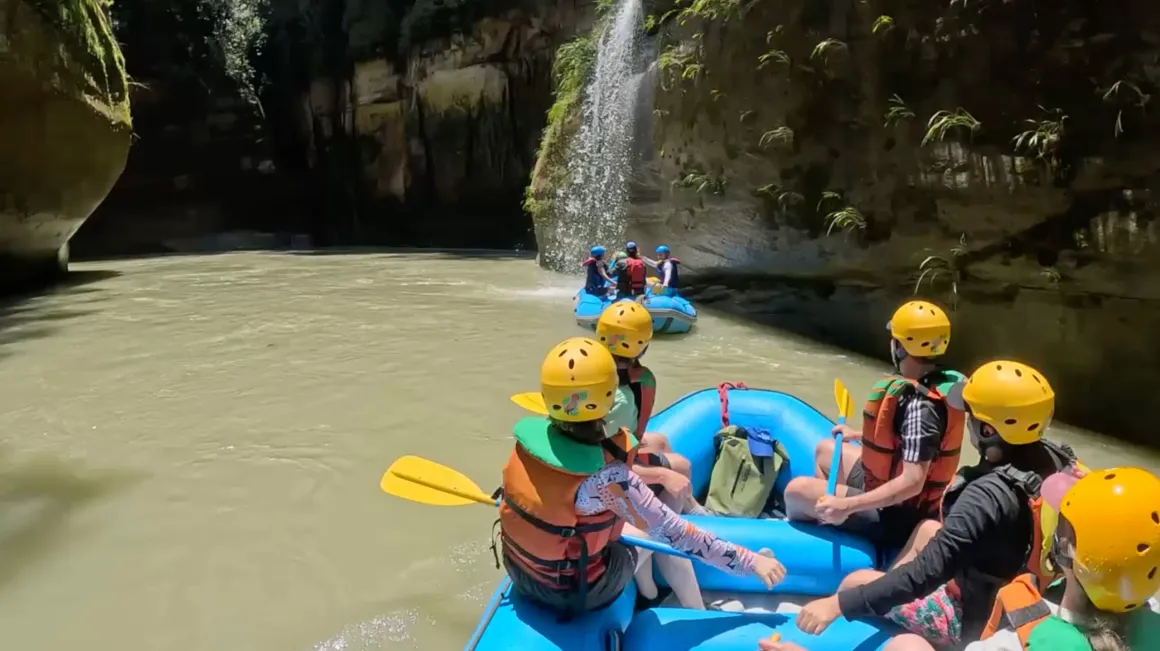
For the United Nations Verification Mission in Colombia, which monitors the reintegration process of Peace Agreement signatories and the security guarantees provided to them and to communities in conflict-affected areas, this type of community-based tourism has helped reshape historical narratives of violence through collective initiatives centered on memory, culture, ancestral traditions, and environmental protection, while also generating income for entire communities.
“Peace tourism has undoubtedly become a tool for reconciliation and an opportunity to help stabilize territories across Colombia. It creates spaces for interaction and trust-building among institutions, the private sector, Peace Agreement signatories, and host communities. This is of crucial importance for peacebuilding,” says Miroslav Jenča, Head of the United Nations Verification Mission in Colombia and Special Representative of the United Nations Secretary-General.
It is four in the afternoon, and the tourists return to Susana's house for an afternoon snack. The excursion covered only the first stretch of the route, but it was enough to explore chili pepper fields, a centuries-old tree, La Milagrosa waterfall, and the coffee production process, as well as to meet dozens of people in Viotá whose livelihoods depend on this project.
Before saying goodbye, José del Carmen lowers his voice. Last year, he received threats from an armed group. “They wanted us to work for them, but we reported them to the authorities,” he says. He refuses to provide any further details. “I've already served my time in prison. I have a family and a second chance, and I want to make the most of it. Now we're working to transform this community. Now we're working for peace,” he adds.
The tourists make their way back along the old cobblestone road. Above them, along the mountain ridges, the Colombian flag and the white flag still flutter in the wind. The mountains are the same, but the times have changed.
By: Jorge Quintero
Communications Officer
United Nations Verification Mission in Colombia


