


Ten years after the signing of the Peace Agreement, victims of the conflict and former members of the former FARC-EP create economic opportunities and share lessons on memory, peace, and reconciliation over a cup of coffee.
More than two decades ago, Claudia Giraldo and John William Taborda experienced the conflict in different regions of the Antioquian mountains. Claudia lived through the conflict in Granada, eastern Antioquia, where, between 6 and 7 December 2000, she survived an 18-hour FARC attack that began with the explosion of a car bomb and was followed by intense fighting. Twenty-two people were killed, and much of the town’s urban center was left in ruins.
Across the mountains, John Taborda’s story unfolded in Ituango, northern Antioquia. Now a peace signatory, John was displaced with his family in 1997 when he was five years old, following an incursion by the United Self-Defense Forces of Colombia (AUC) from the Paramillo mountain range that included the El Aro massacre, in which 15 people were killed. His life changed from that point on, and in 2009 he joined the ranks of the now-defunct FARC’s 18th Front as a combatant and was later imprisoned. “I was able to start over thanks to the signing of the Peace Agreement,” he says.
Claudia and John’s lives have one thing in common: since the signing of the Peace Agreement in 2016, each of them, in their own way, has devoted themselves to growing and marketing coffee while involving farmers, conflict survivors, and peace signatories in their projects.
With the signing of the Agreement, coffee became much more than an agricultural product in Antioquia. In municipalities shaped by decades of conflict, a cup of coffee brings together communities seeking to rebuild the ties broken by war. It is not uncommon to find coffee bags labeled with the word “peace,” or cafés where people gather over a “peace coffee,” with each package telling its own story of reconciliation on the reverse side.
Tejipaz: The Memory of Granada
Medellín is already home to several places where conversations about peace unfold over a cup of coffee. One of them is Trópicos, located in downtown Medellín and promoted by the National Coffee Roundtable Federation, where coffee produced by organizations of peace signatories from different regions of the country is marketed. Tejipaz, Café de la Memoria, is another such space. Opened in February this year in the Provenza area of the El Poblado neighborhood, it is led by conflict victims and farming organizations from eastern Antioquia.

“We experience peace when we sit down to share a cup of coffee, when we spend time together and reconnect with one another,” says Claudia Giraldo, recalling how, 26 years ago, she survived a guerrilla takeover of her town while pregnant, an attack that destroyed much of the municipality. Today, she and her son speak about reconciliation and explain how victims (or survivors, as she prefers to call them), along with rural communities, young people, women, and even peace signatories, take part in productive initiatives focused on coffee, cocoa, panela, fruit, and other agricultural products.
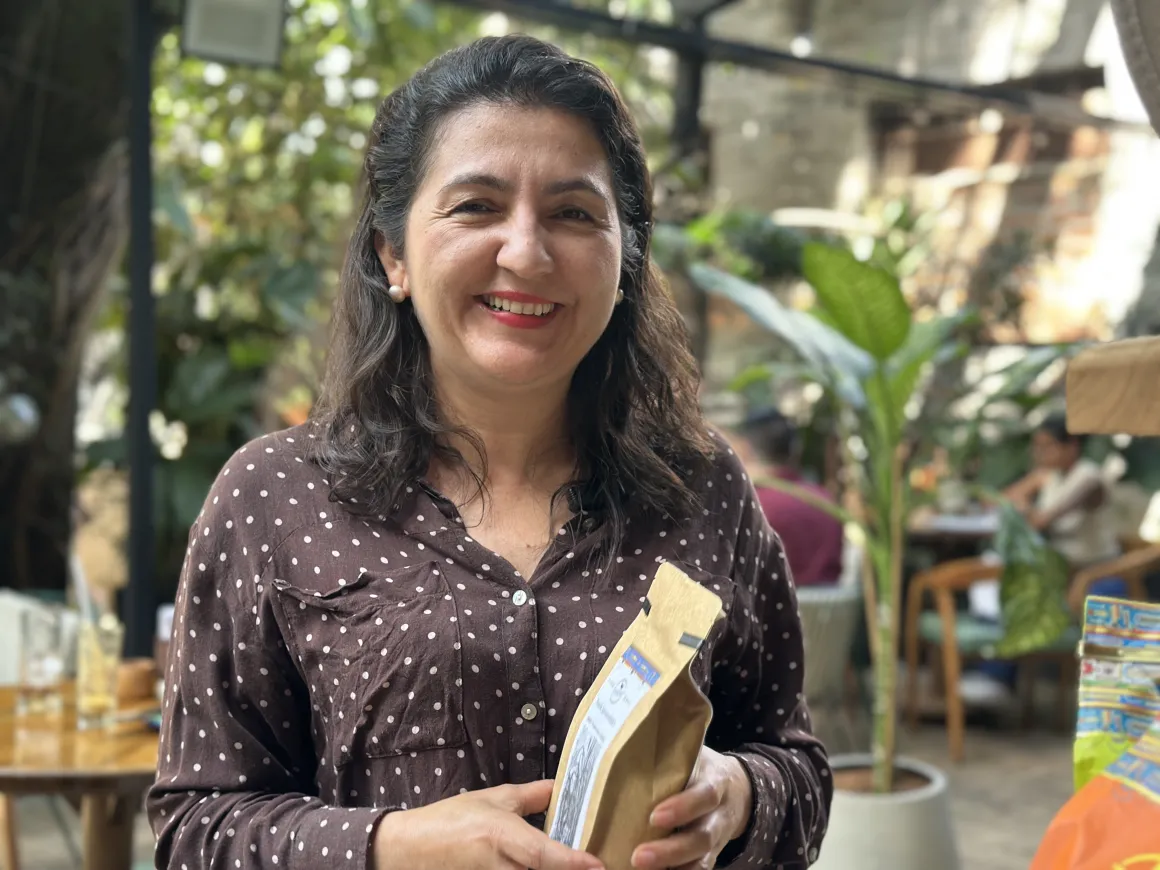
“The war isolated us; it created a barrier between the countryside and the city. Today, we are trying to reconnect with one another. Coffee is the perfect excuse to sit down and talk,” says Claudia Giraldo, who has led reconciliation initiatives in Granada.
She traces the origins of Tejipaz to 2015, when she tasted a premium Colombian coffee in the United States for the first time. This experience prompted her to ask why Colombians were not consuming the finest products they themselves cultivated. The following year, together with other farmers from Granada, she began producing specialty, organic, and sustainable coffee as part of a commitment to health, the rural economy, and reconciliation.
“We wanted to prove that it was possible to earn a living from the countryside again and recover our traditions. One of the consequences of the conflict is displacement, and many people do not understand what it means to rebuild a town. That was the beginning of our coffee project, which went on to generate an entire production chain. Today, we want people in Medellín to rediscover the value of what is produced in rural communities.”
Currently, the initiative involves 30 farmers’ associations and benefits 1,000 families in Granada and neighboring municipalities during different production seasons. Most of Tejipaz’s members are women who survived the conflict.

“We experience peace when we sit down to enjoy a cup of coffee. Peace cannot be imposed; it must be built little by little, starting from the heart,” she says, as she expresses gratitude to the many people who have joined this effort: “Over the past ten years, we have received support at different times from the Granada municipal government, the Antioquia Departmental Government, the United Nations, and private-sector partners, all of whom see this as an opportunity for growth.”
Ubuntu: “I am because we are”
The philosophy of “I am because we are” runs through the story of John William Taborda, a signatory to the Peace Agreement and legal representative of Coomudess, a multi-purpose cooperative behind the Ubuntu Coffee brand in Fredonia, southwestern Antioquia.
“These ten years have been marked by many challenges and lessons. After laying down arms, I studied Business Administration and found in coffee an opportunity for both economic sustainability and social transformation. It allowed us to connect with people beyond the signing of the Agreement,” he says.
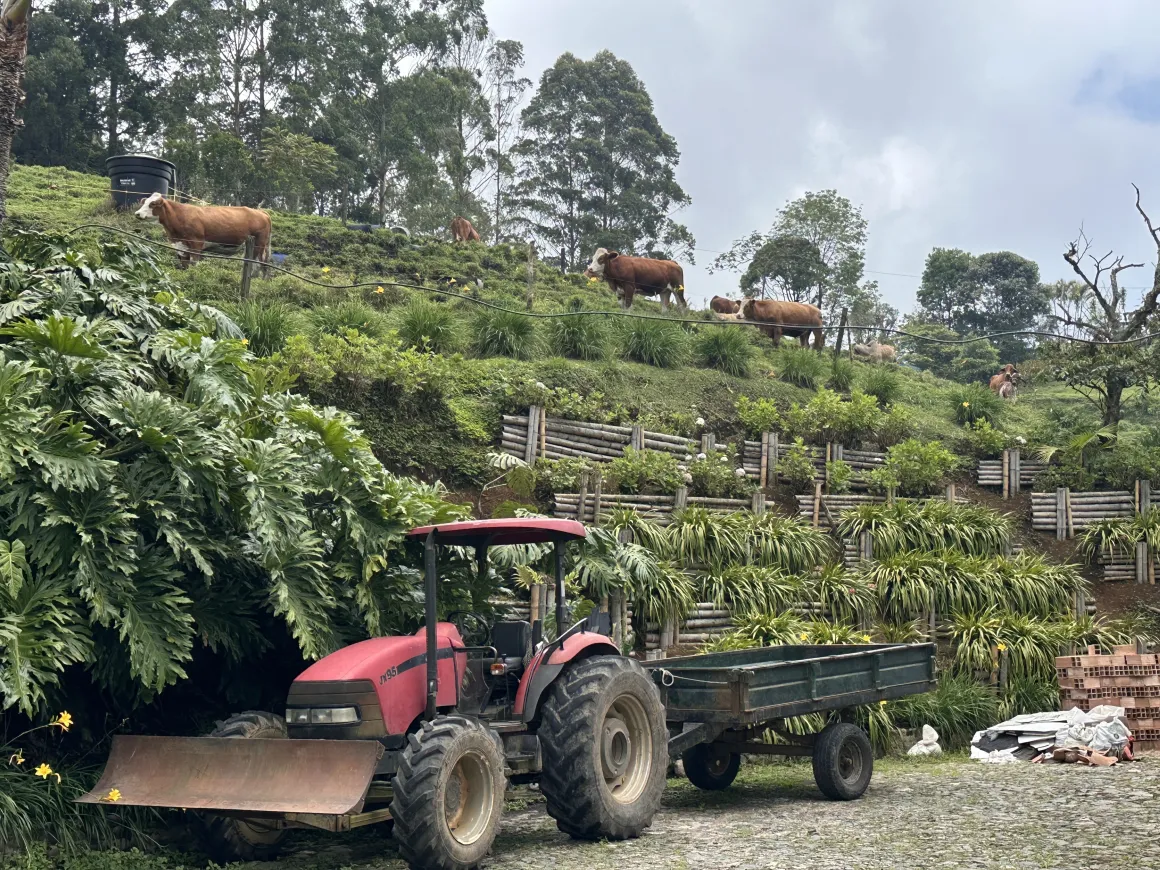
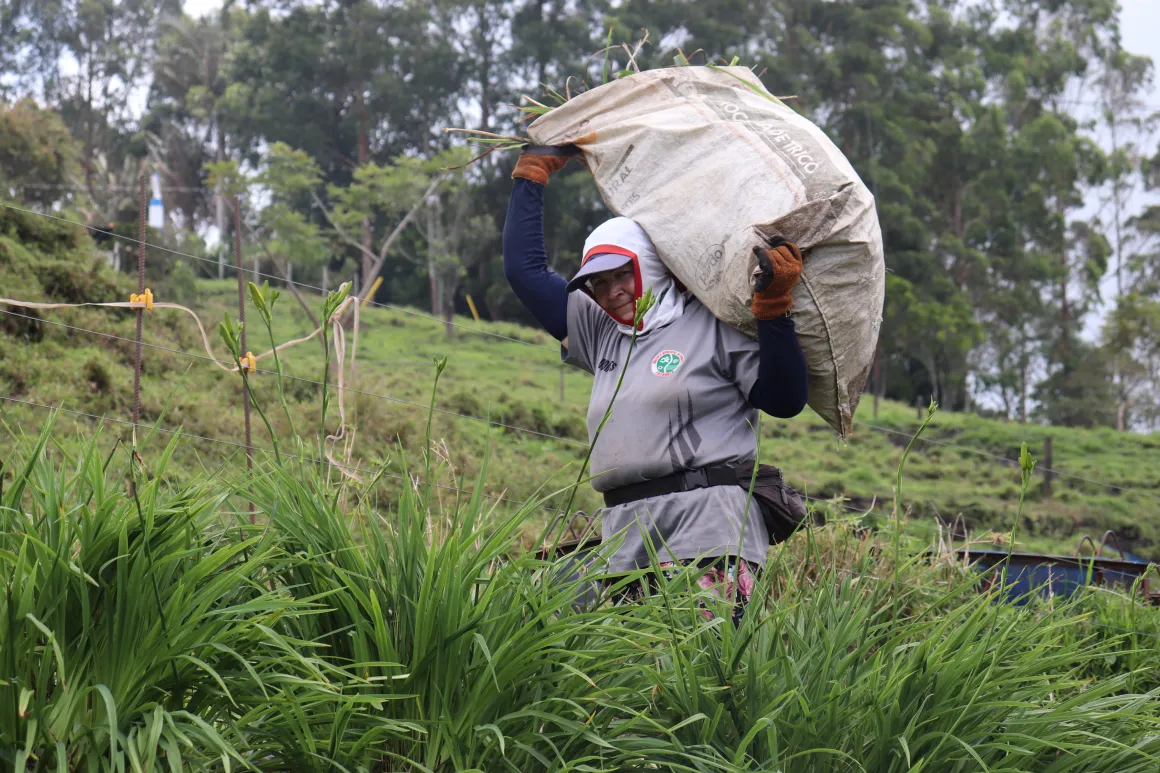
Ubuntu, Taborda explains, comes from a South African philosophy whose best-known translation is “I am because we are.” The project currently brings together 24 people: 14 peace signatories and 10 community members.
The cooperative is involved in the entire value chain: cultivation, harvesting, processing, roasting, grinding, and marketing. Their specialty coffee, grown in Fredonia at nearly 2,000 meters above sea level, has achieved cup scores of up to 86 points. For Taborda, however, the most important achievement goes beyond the product. “We are not the same people we were ten years ago. We have learned, studied, and rebuilt relationships with communities.”
He recalls that the reintegration process has faced political, economic, and security challenges, but insists that the commitment to peace continues. “The Agreement opened new paths for us and our families. One of the greatest changes has been our ability to reunite with our families, pursue an education, and build collective productive projects. We are proud to be working to turn the page on war,” he adds.

Luz Amalia Jaramillo spent 16 years in the guerrilla movement. Five years ago, she arrived in Medellín from Ituango, and she still remembers the fear she felt when walking through the city alone. “I used to get lost in the streets all the time, and I was afraid to go out on my own,” she recalls.
Today, she is part of the Ubuntu project and says she has found a new family there. “We are a very close-knit group, and we want to keep growing so we can help more women and rural communities. We must keep moving forward and make sure future generations do not repeat our history,” she says as she hugs her seven-year-old daughter.
“My dream is for her to have opportunities. I joined the guerrilla movement when I was 14, and that was where I spent virtually all of my youth. Today, I have hope, and I work so that she can live a dignified life and have the opportunity to study,” says Luz Amalia.
Carlos Mario Henao, a teacher and president of Coomudess’s Board of Directors, believes that initiatives such as Ubuntu show that it is indeed possible to build different relationships in territories affected by violence. “In this initiative, the conversation is not about victims and victimizers. We talk about people working together.”
For him, coffee became an opportunity for production, fair trade, and reconciliation. “What matters most is recognizing the worth of every human being, no matter where they come from.”
In Fredonia, Jorge Andrés Jiménez, manager of Hacienda La Chapolera, where Ubuntu Coffee is produced, agrees that projects like these demonstrate that it is indeed possible to create shared spaces. “On the farm, we support collaborative work involving peace signatories and farming communities. We all have something to contribute.”
What Does Peace Have in Common with Coffee?
“What does peace have in common with coffee?” asks Daniel Castaño, one of the customers at Café Trópicos, located in the University of Antioquia’s Extension Building. He poses the question to manager Camila Graciano, a signatory to the Peace Agreement who proudly displays her certification as a barista.
“They are similar in that both the Peace Agreement and coffee carry notes of reconciliation. It is a constant learning process, and it teaches us to treat one another with kindness. I know I come from a different world, and I am being welcomed into a different one. It starts with recognizing one another and sharing a conversation over a cup of coffee,” Camila replies.
Trópicos operates as an umbrella brand that brings together coffee produced by organizations of peace signatories from different regions of the country. “At first, people were wary. However, when they saw our commitment to the process, they supported us. Each brand has its own customer base,” she says as she explains the chocolatey, citrus, and sweet notes of the coffee produced in Antioquia and other regions, including Ubuntu, Paramillo, and Cinzonte.

Reintegration and Reconciliation
The work carried out through initiatives such as Ubuntu Coffee is part of a wider reintegration network operating across the department. According to figures from the Agency for Reintegration and Normalization (ARN), as of 28 February 2026, 1,240 people in Antioquia are currently engaged in the reintegration process: 335 women and 905 men, with the largest concentrations in the Urabá region and the Aburrá Valley.
At the same time, former combatants are leading 624 collective and individual productive projects that benefit 1,215 people. Of these, 609 are individual initiatives and 15 are collective projects related to agriculture, apparel manufacturing, tourism, livestock farming, honey production, and coffee.
In Dabeiba, Mutatá, Fredonia, Ituango, and Medellín, various cooperatives and associations have begun building productive value chains and marketing spaces where peace is also discussed over a cup of coffee.
In a country still marked by wounds and polarization, coffee has become an unexpected metaphor: an everyday drink that brings survivors, peace signatories, and citizens back to the same table.

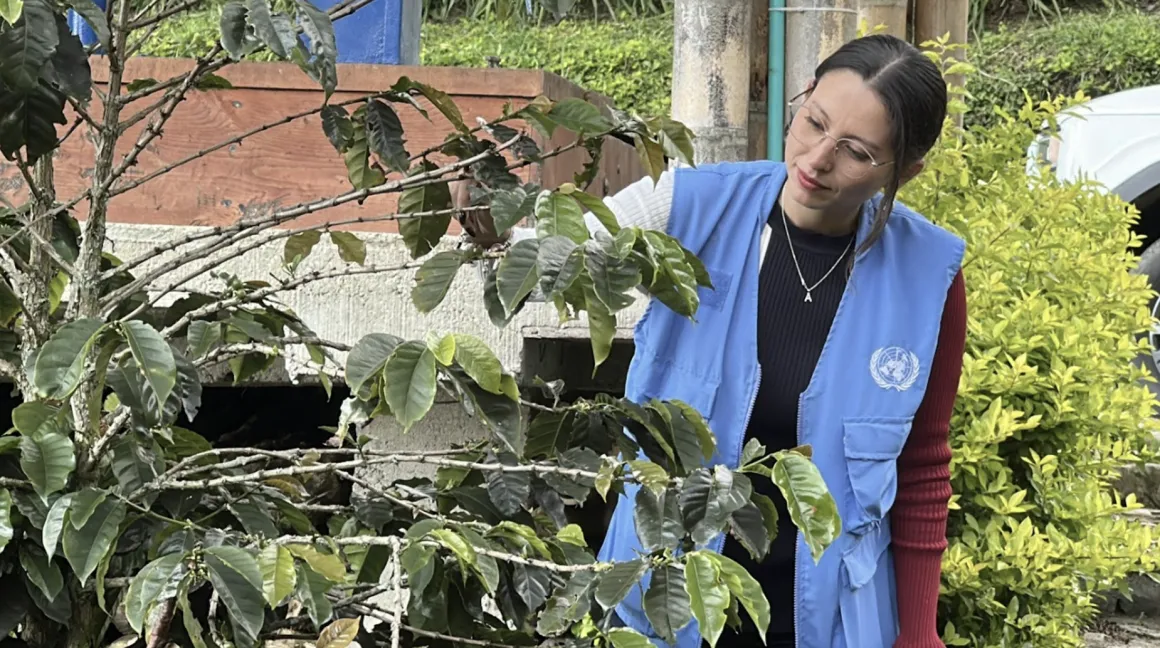
“Peace coffee is born wherever communities choose to transform pain into connection and their territory into hope. Colombia is showing the world that reconciliation can also carry the aroma of coffee. That is why, at the United Nations Verification Mission, we continue to support these initiatives,” says Richard Clarke, Deputy Head of the Medellín Regional Office of the United Nations Verification Mission in Colombia.
Holding a steaming cup in his hands, Juan Carlos Vélez, a customer at Café Trópicos, puts it simply: “Peace, like coffee, is for everyone.”
Article and photos by: Elizabeth Yarce, Strategic Communications Officer
Medellín Regional Office
United Nations Verification Mission in Colombia


