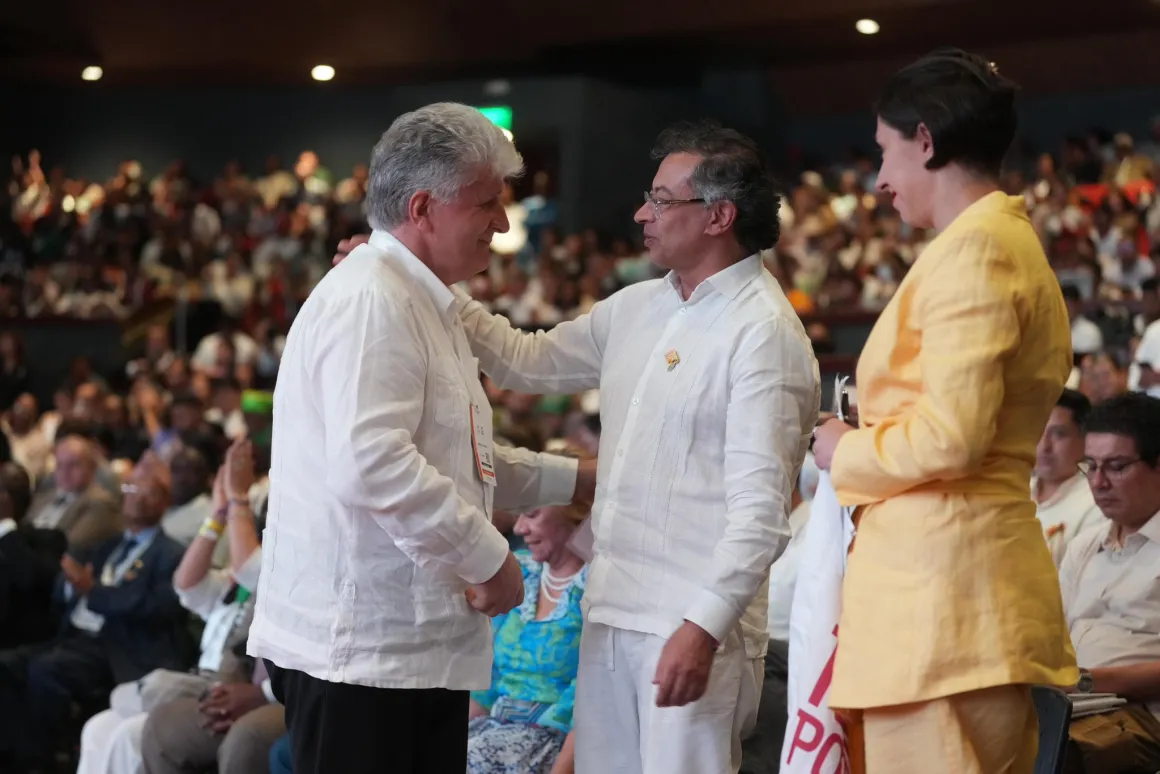


President Gustavo Petro, Excellencies, distinguished guests,
It is an honour to participate in this forum for multilateral dialogue.
This Conference constitutes a valuable opportunity to strengthen cooperation on agrarian reform and peacebuilding. Since the signing of the Final Peace Agreement in 2016, Colombia has been at the forefront of the international debate on this matter.
Comprehensive Rural Reform is an essential pillar for consolidating sustainable peace. The aim is not merely to create economic opportunities, but to tackle historical inequalities that have fueled cycles of violence. Comparative experience demonstrates that the agrarian reform has been key in the resolution of rural conflicts and in peacebuilding.
Distinguished delegates and participants,
In Colombia, the Comprehensive Rural Reform, whose implementation we have been verifying since 2023, seeks to transform territories and develop peaceful and prosperous rural areas.
First, it focuses on preventing conflict by targeting one of the structural causes of the armed conflict: unequal access to land. Rural communities have been the most affected, as most of the over eight million displaced people come from rural areas, and land dispossession reached millions of hectares.
Both the report of the Truth Commission and the Inter-American Commission on Human Rights have highlighted the relationship between conflict and land concentration. The reform provides tools for land allocation and territorial transformation, generating development opportunities.
Second, it seeks to close the gaps between urban and rural territories and promotes greater prosperity for the country. It goes beyond access to land, since it requires effective state presence, public goods, services and infrastructure that drive rural development.
Likewise, it contributes to reducing poverty and inequality. Currently, multidimensional rural poverty stands at 24.3%, while the national rate is 11.5%. Behind these figures are millions of lives. It is crucial to ensure access to land, services and dignified livelihoods for landless peasants, victims, rural women, and ethnic peoples.
The reform also provides alternatives to illegal economies. Over 90% of illicit crops are located in territories prioritized under the Agreement. When legal opportunities and state presence are in place, the space for armed groups and illicit economies is reduced.
It is therefore essential to implement reforms with urgency and determination.
The Verification Mission, as requested by President Petro, is overseeing the implementation of the Comprehensive Rural Reform and the legal and institutional framework required for its implementation, including the establishment of key institutions such as the Agrarian Jurisdiction, as well as efforts to expand access to land and advance territorial transformation.
However, significant challenges remain.
Rural development must be paired with human security policies. Peace, development, and security are complementary agendas. The reform cannot move forward if land claimants, peasants and public officials continue to face threats. The Agreement provides for preventive and protective measures that must be fully implemented, among them the dismantling of criminal groups.
Finally, advancing toward more prosperous and inclusive societies requires strengthening the central role of rural women. Expanding their equitable access to land and empowering their leadership not only closes historical gaps but also lays firmer foundations for sustainable and lasting peace.
Thank you very much.