


In this municipality, historically impacted by the armed conflict, a strategy led by the Municipal Ombudsperson’s Office is fostering peacebuilding.
San José del Palmar, a municipality of Chocó, surrounded by mountains and rich in environmental diversity. More than half of its territory located inside the Tatamá National Natural Park. The municipality has also been historically affected by the armed conflict. In fact, after the Peace Agreement was signed in 2016, it received the ZOMAC (Zonas Más Afectadas por el Conflicto Armado) classification, meaning it was designated as one of the areas most affected by the armed conflict.
There, the Municipal Ombudswoman, Helen Johana Cuero Rivas, is engaged in a sustained approach to prevention and the promotion of rights. Her work involves coordinated action with communities, educational institutions, the justice sector, and the United Nations system to build protective environments and offer children and young people tangible alternatives to violence.
According to the Ombudswoman, peacebuilding takes place in the school, in the village, on the football field and in spaces where children and teenagers learn that rights are not distant concepts but real tools to protect lives, resolve conflicts and transform their environment. Her approach is grounded on a key idea: educating citizens from an early age is an effective way to de-escalate violence, strengthen the social fabric and offer real alternatives to future generations.
In 2025, the Office of the Ombudsman issued Early Warning 007, highlighting ongoing risks to the civilian population linked to the dynamics of the armed conflict, possible disputes over territorial control, mobility disruptions, and growing pressures on rural communities. The document raised particular concern about the vulnerability of children and adolescents and called for strengthening institutional presence to prevent situations such as threats, intimidation, recruitment, and other human rights violations.
The Municipal Ombudsperson’s Office and Schools as Foundations for Peace
Helen explains that a central pillar of her work is the Children’s Network for the Defense of the Constitution, an initiative led by the Municipal Ombudsperson’s Office. Through the booklet Guardians of the Constitution, created by the Constitutional Court, the initiative helps children understand their rights and responsibilities, recognize them in everyday situations, and develop the skills necessary to defend them peacefully. The program was integrated into the school curriculum, especially in the Peace Education and Social Studies subjects, allowing a continuous process throughout the entire academic year.
In the classroom, students reflect on concepts that affect their daily lives, such as the right to health, the respect for identity, the free development of personality or the consequences of bullying. The methodologies used encourage participation and creativity. The initiative organizes “Painting for Peace” days, theatrical performances, and activities to engage with the virtual microsite to learn about the Constitution. It even holds picnic-style activities that turn learning into a close and meaningful experience, especially for children in rural areas facing a high risk of dropping out of school.
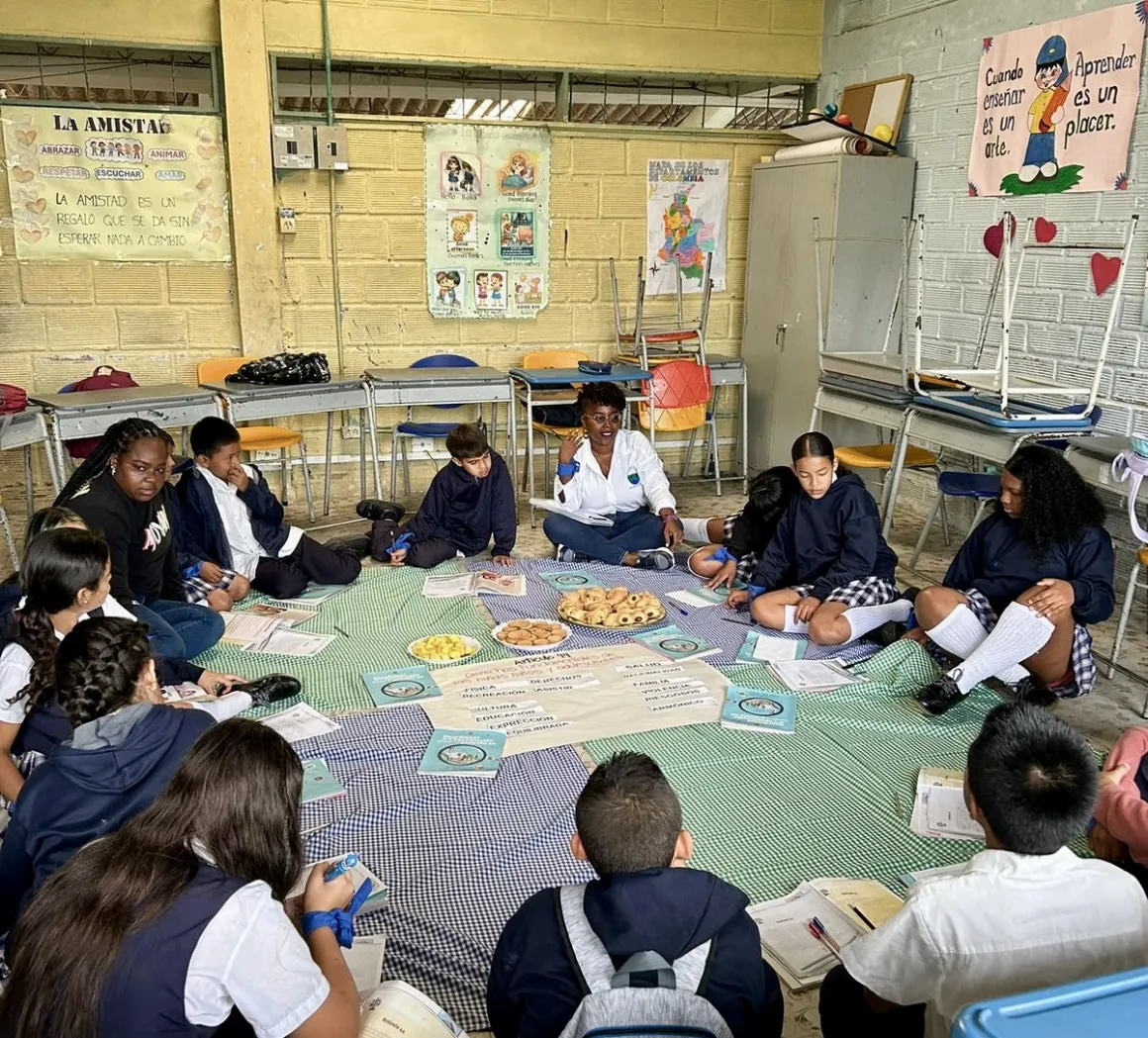
According to the Ombudswoman, nearly 36 students actively participated in these activities over the past year. Many shared that the program allows them to “talk about what they think and feel,” “learn to respect others,” and “feel heard,” all of which are essential elements for building trust and a sense of belonging in a territory marked by geographic dispersion and historical inequalities.
An Embera Katío indigenous student from the San José Educational Institution explained that he now sees himself as an advocate within the San José del Palmar Children’s Network. “Thanks to the lessons and the activities in which we could express what we felt and thought, I learned that we must respect all the cultures, ethnic groups, and languages we speak. It is our fundamental right under the Constitution of Colombia,” he said.
Regarding efforts with adolescents and young people, the work continues through the Leadership and Peacebuilding Program “Young People Who Transform”, also promoted by the Municipal Ombudsperson’s Office. On a biweekly basis, a group of students engage in training sessions that blend academic content with social and cultural activities.
There, a key pedagogical tool emerged: the “Missions Passport”. It was designed to encourage young people to apply what they have learned while fulfilling their educational social service. This strategy not only helps them become aware of the challenges affecting the territory but also strengthens their capacity to identify opportunities to improve social and community conditions in San José del Palmar.
In that vein, the missions included the drafting of rights of petition and learning about the use of the tutela mechanism, a Colombian constitutional legal action used to protect fundamental rights. These missions were not a simulated exercise. Guided by the Ombudsperson’s Office, they worked on a real case involving a tutela to protect the right to health of a 10-year-old boy who was a fellow student at the educational institution.
Helen reports that the court’s decision was favourable, but the most meaningful moment came afterward. In response to one of the requests, the judge sent the child a letter in clear and friendly language, explaining how his right had been protected. In an educational video, the student read the letter aloud to his classmates, detailing how his fundamental right to health had been protected, and how the justice system operates, emphasizing that it also pertains to children and adolescents. For many of them, it was the first time they realized that constitutional mechanisms are neither distant nor inaccessible. This experience transformed their perception of justice. What once felt distant became a tangible lived experience of solidarity, support and collective action.
The training of these young people, led by the Municipal Ombudsperson’s Office, included a visit to the Chocó Robotics School, together with the United Nations Verification Mission in Colombia. Through virtual reality sessions, they explored stories from the Peace Agreement and found new meaning in the pedagogical tools and technological resources to strengthen leadership, creativity and a culture of peace in future generations.
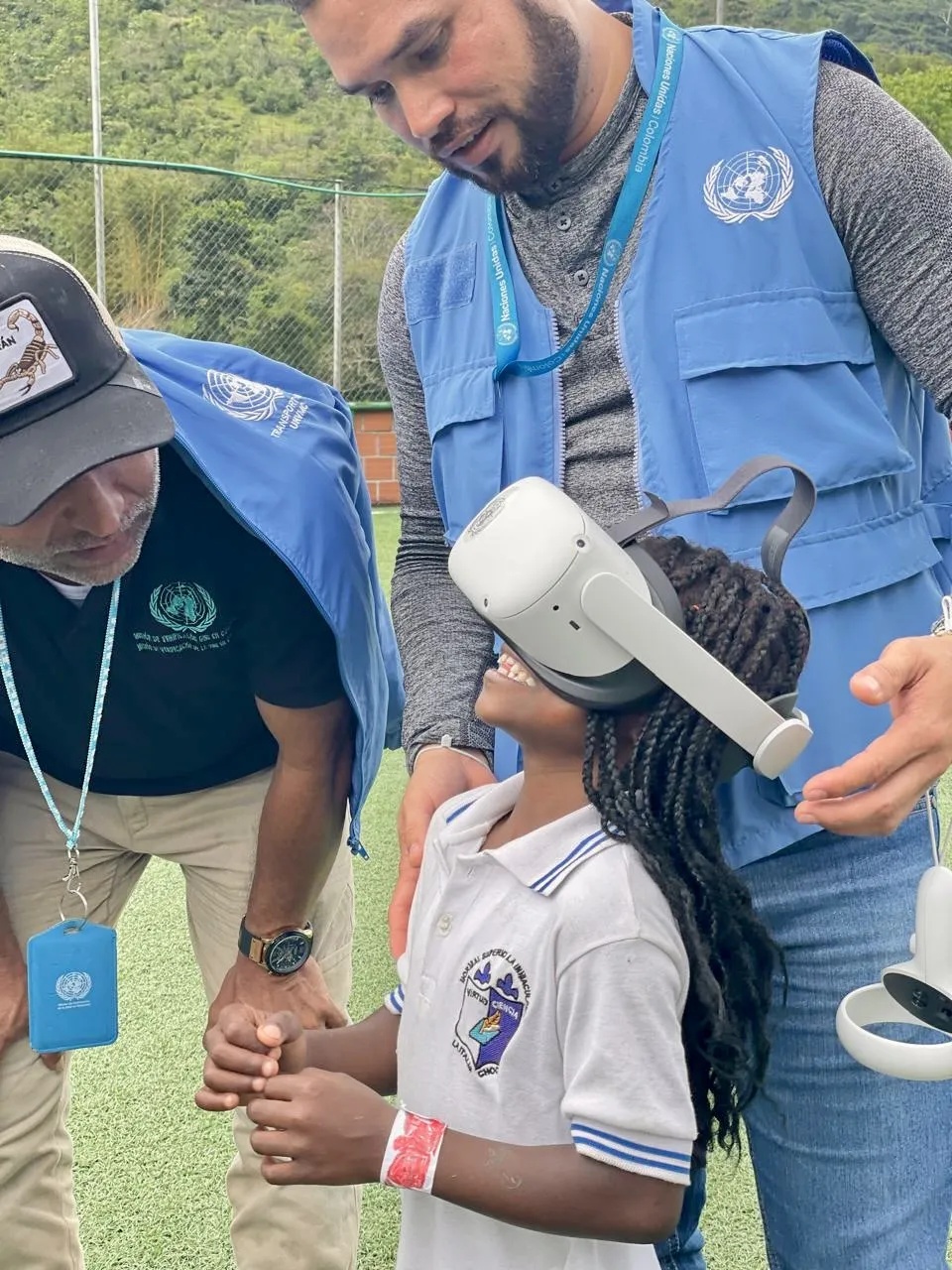
A 15-year-old student was one of the participants in the Virtual Reality Day. For her, the experience was “very positive.” Listening to the Robotics teacher motivated her to pursue her dreams and work toward peace in San José del Palmar. “Thanks to the Municipal Ombudsperson’s Office, we learned about leadership, teamwork, and the importance of knowing our rights and responsibilities. We also came to understand that there are mechanisms to stand up for the most vulnerable,” she said.
Culture, Equity and Community
Helen explains that the training in rights is complemented by cultural and solidarity-based activities. The young participants have taken part in candlelight vigils for the International Day of Peace, and have promoted artistic, educational, and cultural events. Furthermore, they organized self-management initiatives, such as food sales supported by their caregivers, in order to raise funds. With what they collected, they were able to purchase educational toys for two village schools, strengthening learning through play and solidarity.
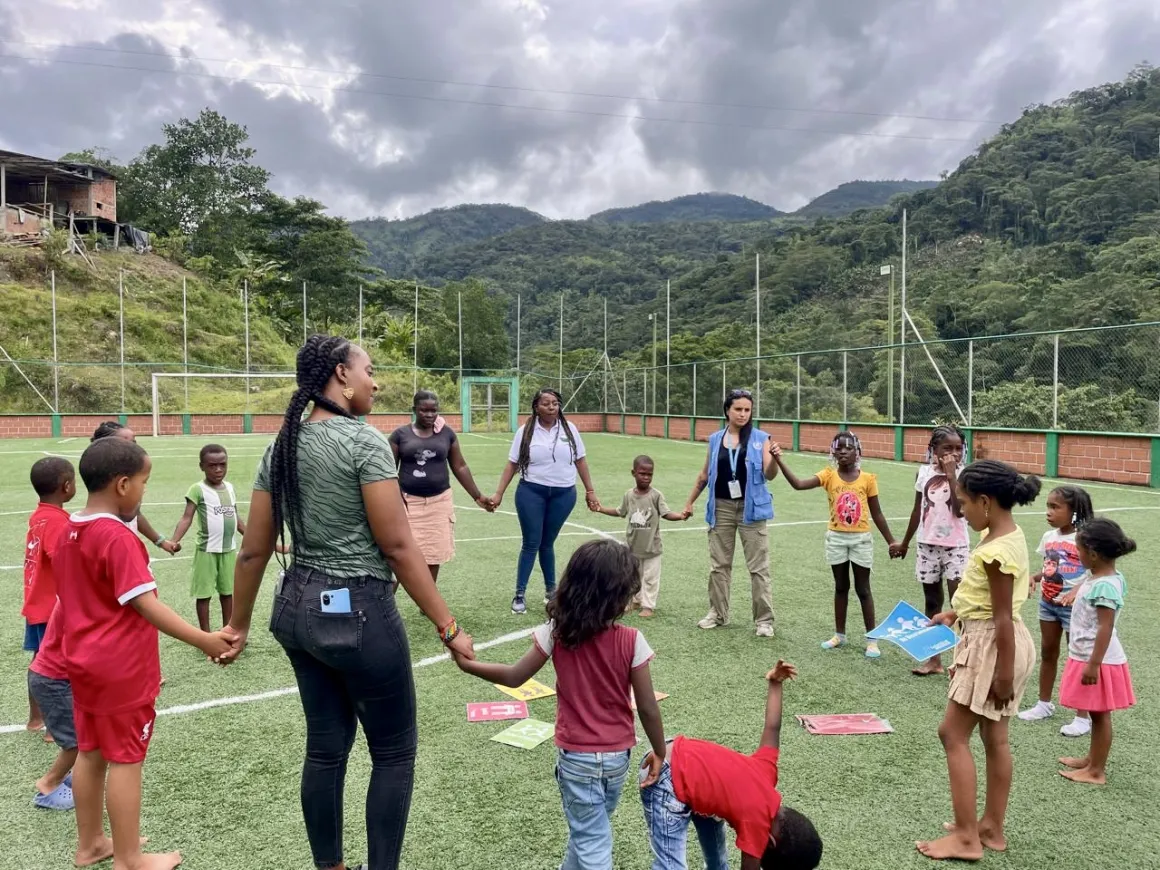
The gender-equity and violence-prevention approach is also woven throughout the initiatives. Using pedagogical tools developed alongside the United Nations Children’s Fund (UNICEF), children reflect on equality, respect, and gender-based violence. On the football field, for instance, mixed-gender play serves as a practical demonstration that there are no sports “for boys” or “for girls,” only shared spaces in which all children have equal opportunities.
Support that Sustains the Process
Throughout all these actions, the support of the United Nations Verification Mission in Colombia has played a key role. Its constant presence in the territory and the logistical support it provides have made it possible for many of the initiatives led by the Municipal Ombudsperson’s Office to materialize despite the limitations of working in a rural and dispersed municipality.
The Mission’s support has facilitated pedagogical activities, community gatherings, and youth-focused processes, while also contributing to the strengthening of local participation spaces. In a context of risk signalled by the Early Warning, this international support reinforces the institutional capacity to protect the civilian population and promote preventive responses grounded in education, participation, and human rights.
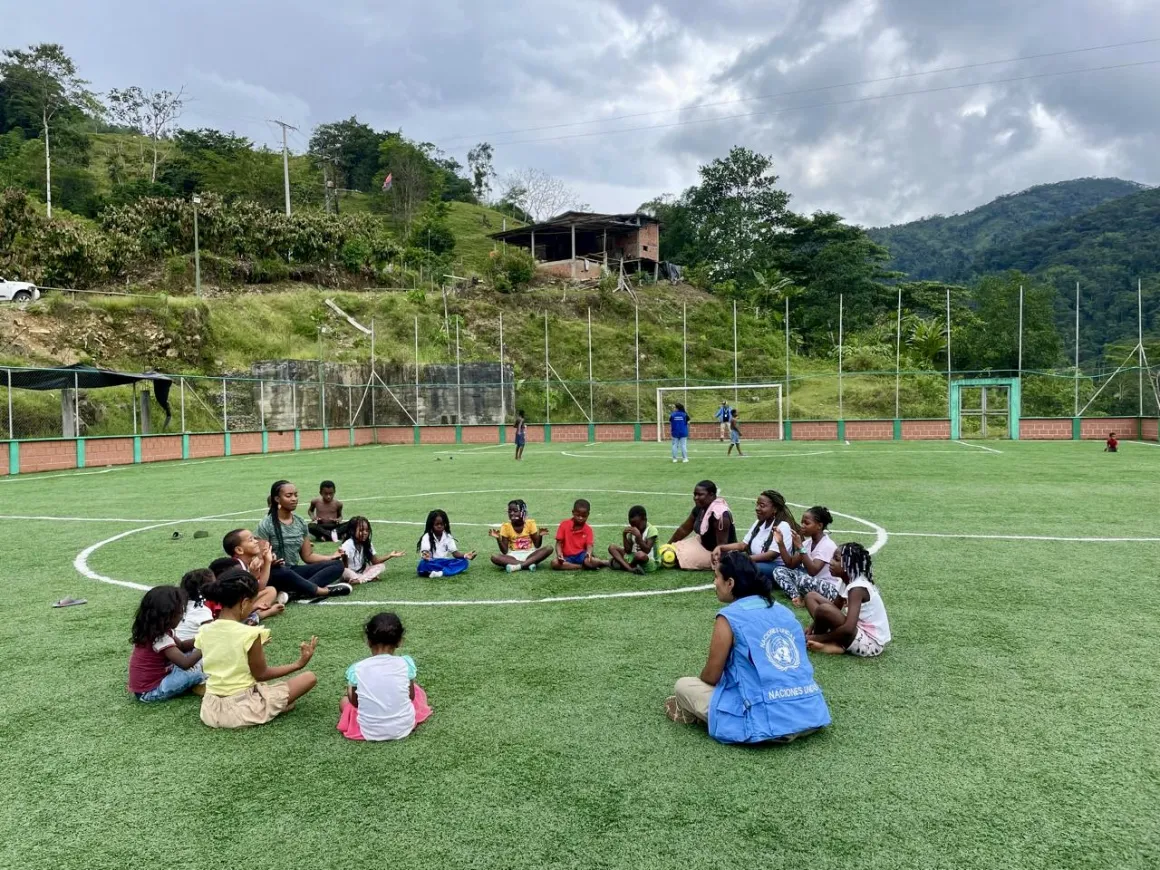
At the forefront of these efforts is a resolute institutional team, among them the Municipal Ombudswoman Helen Johana Cuero Rivas, whose work focuses on strengthening prevention and the promotion of rights as the basis for coexistence and territorial peace. Rather than individual recognition, the focus is on collective work and the coordination between communities, local institutions, and international support.
Melissa Jaimes Ochoa
Strategic Communications Officer – Quibdó Regional Office
Ana María Bustos Parra
Field Officer
United Nations Verification Mission in Colombia


